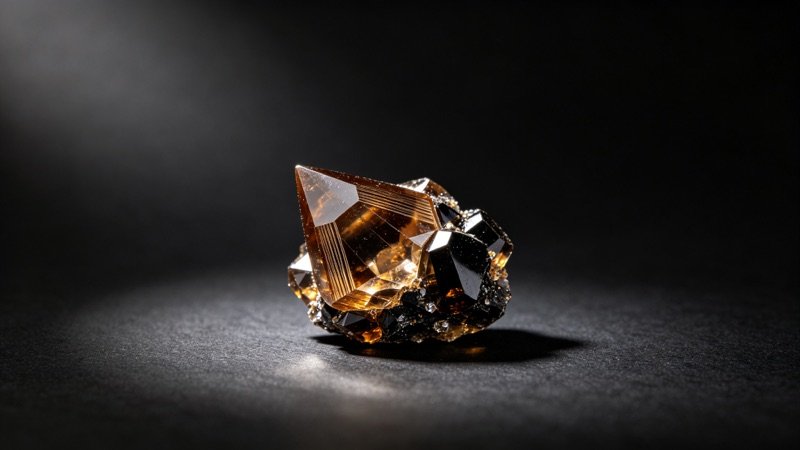
Tin is one of the earliest metals domesticated by humanity; by melting with copper it produced bronze, directly carrying civilization from the Stone Age into the Bronze Age. Today its largest modern use remains soldering: from integrated-circuit leads to mobile-phone motherboards, and from home appliances to aerospace electronics, tin-based solders mechanically join and electrically conduct tens of thousands of electronic components. As environmental regulations phased out lead-tin alloys, mainstream solder has shifted to tin-silver-copper lead-free solder. Tinned steel (tinplate) is another long-standing major use of tin: a layer of tin less than one micrometer thick on thin steel sheet is rust-resistant, non-toxic, solderable, and printable, making it the raw material for the great majority of today's food cans, beverage cans, aerosol cans, and biscuit tins worldwide. Bronze (a copper-tin alloy) has been used continuously for three thousand years: bronze containing about 10% tin casts well and is wear- and corrosion-resistant, used for gears, bearings, sculptures, coins, and bells; later grades such as phosphor bronze and tin brass were developed for springs, contacts, and ship propellers. Tin also plays many alloying roles: fusible alloys are used in fire sprinklers and electrical fuses, and tin-based babbitt is a classic antifriction material for engine and steam-turbine bearings. In the float process for glass, a bath of molten tin is the supporting bed that gives float glass its flat surface.
Tin dioxide (SnO2, stannic oxide) is a white semiconductor powder; when doped with antimony or fluorine it becomes a transparent conductive oxide used in transparent electrodes, gas sensors (the gas-sensitive layer of alcohol, carbon-monoxide, and combustible-gas alarms is SnO2 nanomaterial), and ceramic glazes. It is also the main component of cassiterite, the principal tin ore. Tin tetrachloride (SnCl4) is a colorless, fuming liquid that hydrolyzes strongly in air; it is used to prepare tin compounds, as a mordant, a polyester-fiber catalyst, and a sensitized-paper coating, and historically was used as a smoke-screen agent. Tin monosulfide (SnS, often golden-yellow scaly crystals) has been a cheap golden decorative pigment since ancient times, commonly called mosaic gold, used for gilding woodwork, watercolors, and inks; today it is used mainly in semiconductor thin films and photovoltaic research. The more common tin disulfide (SnS2), golden and lustrous in appearance, is also a traditional golden pigment. Bronze is not a compound but a copper-tin alloy (typically 5%–15% tin); because of its good casting fluidity, wear resistance, and resistance to seawater corrosion, it has been used continuously from Shang-Zhou bronze vessels to modern ship propellers, sculptures, and gears.