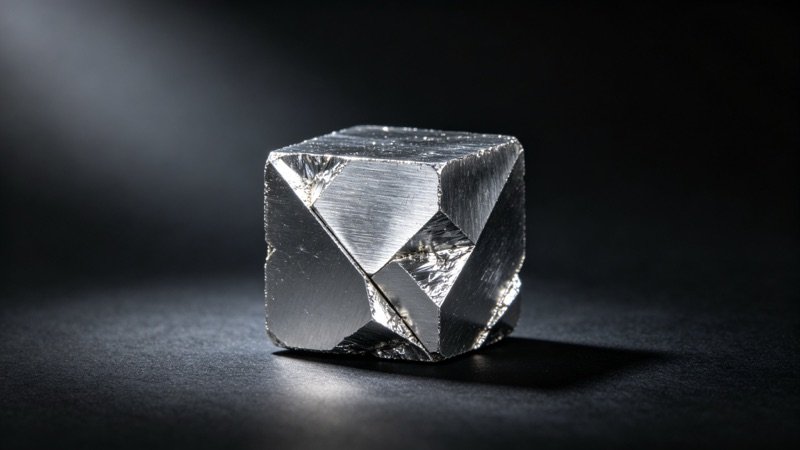
Lead is one of the metals humanity has used longest: silver-gray, soft, dense, corrosion-resistant and easy to work. Its largest modern use is lead-acid batteries. From automotive starter batteries and power batteries for vans and trucks to forklifts, wind power, photovoltaic storage and data-center UPS backup, almost every storage scenario requiring high current, low cost and long cycles uses lead-acid batteries; this single application accounts for the bulk of global lead consumption and is also the most mature metal recycling stream - spent batteries are almost all remelted. Its second traditional use is cable sheathing and radiation shielding, exploiting its corrosion resistance and ability to block ionizing radiation to make shielding walls, lead glass and lead plates for nuclear plants, hospital X-ray rooms and nuclear facilities. In defense, lead has long been used in bullets and artillery shells; because it is dense, deforms easily and is easy to work, it is the cheapest barrier-piercing material. However, for environmental reasons, lead in hunting shot and fishing sinkers is being progressively replaced by steel, tungsten and bismuth. Historically lead was used heavily in water pipes (the English word 'plumbing' itself derives from plumbum, the Latin name for lead), in the gasoline antiknock additive tetraethyllead and in the paint pigment white lead; these uses were long ago banned worldwide because of lead's neurotoxicity. Modern lead applications are highly concentrated at the two ends of batteries and shielding, and depend heavily on a closed-loop recycling system.
Lead sulfide (PbS), i.e. galena, is the main lead ore in nature: silver-gray cubic crystals with metallic luster, and the principal feedstock of global lead smelting; its infrared photoconductivity also made it an early infrared-detector material. Lead oxide (PbO, litharge) is the core intermediate of lead smelting and batteries, used to make lead sheets, glass and ceramic glazes, and is also the precursor of the active material on lead-acid battery plates. Lead sulfate (PbSO4) is the product formed jointly at both plates when a lead-acid battery discharges; its accumulation is the main cause of battery failure by sulfation, and is also an intermediate in lead-recovery processes. Lead acetate (Pb(CH3COO)2), also called sugar of lead for its faintly sweet taste, was historically used in medicine, cosmetics and sweeteners; because of its high toxicity it was long ago discarded, and is now used only in small quantities in chemical analysis and certain electroplating processes. In addition, red lead (Pb3O4) long served as an anti-corrosive primer and glass pigment, and chrome yellow was once a yellow paint; these lead-containing pigments and coatings have all been displaced by modern water-based eco-friendly coatings because of their toxicity.