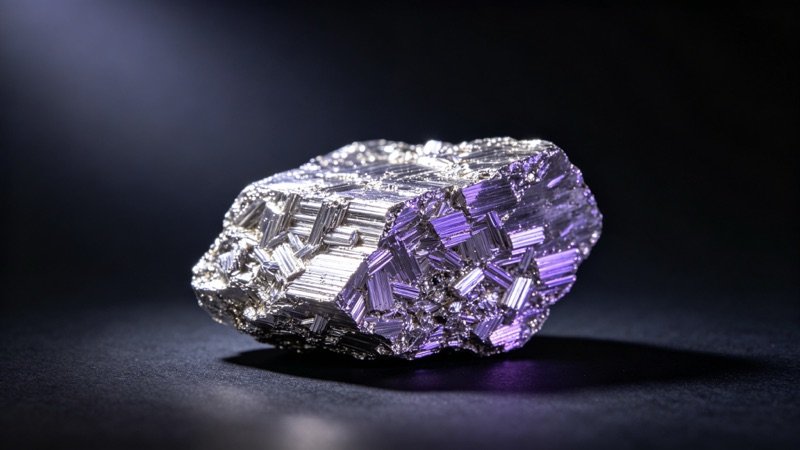
Cm
96
Curium
Curium is a chemical element; it has symbol Cm and atomic number 96. This transuranic actinide element was first produced and identified in 1944 by Glenn T. Seaborg, Ralph A. James, and Albert Ghiorso by bombarding plutonium-239 with helium ions. Curium was named in honor of Marie and Pierre Curie. Curium-242 and curium-244 have been used as alpha particle sources and in radioisotope thermoelectric generators for spacecraft, though less frequently than plutonium-238.
Actinide
silvery metallic, glows purpl...