Home/ Elements/ Th
Thorium
Th 90

Thorium

Thorium is a chemical element; it has symbol Th and atomic number 90. Thorium is a slightly radioactive metal that occurs in small amounts in most rocks and soils. It is about three times more abundant than uranium in Earth's crust. The most common isotope is thorium-232, with a half-life of 14.05 billion years—about three times the age of the Earth. Thorium has been tested as an alternative nuclear fuel to uranium, as it produces less radioactive waste and is more abundant. Thorium compounds are also used in magnesium-thorium alloys for aerospace and as a catalyst in the petrochemical industry.

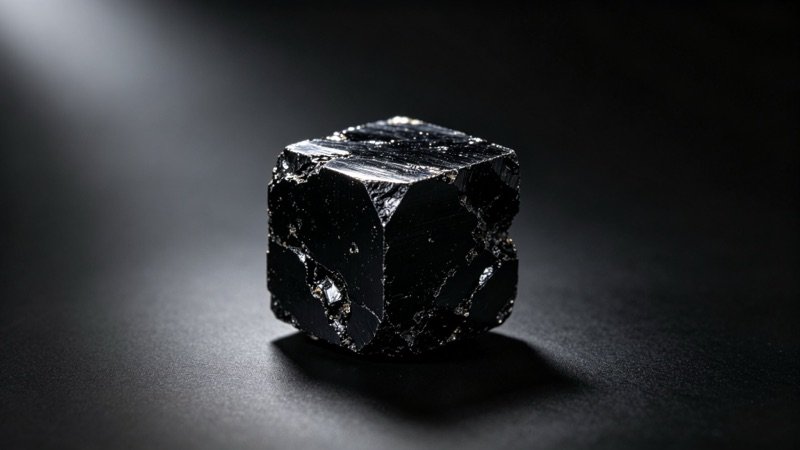
Actinide USGS 2025 silvery, often with black tarnish
Atomic number 90Z
Atomic mass 232.038u
Valence e⁻ 2
Electron config. 1s2 2s2 2p6 3s2 3p6 4s2 3d10 4p6 5s2 4d10 5p6 6s2 4f14 5d10 6p6 7s2 6d2
Density
11.72g/cm³
Melting point
1750°C
Crustal abundance
9.6ppm
Annual production
5000tonnes Th
Recycling rate
Low

Why This Element

Thorium is the second most abundant radioactive element in Earth's crust (twice as abundant as uranium) and has been proposed as a future nuclear fuel — thorium-232 can be converted to fissile uranium-233 via neutron absorption, offering a closed fuel cycle with minimal long-lived waste, though practical challenges have delayed commercialization.

Applications

Nuclear fuel candidateAlloysGas lamp mantles

Applications in DepthElement & compound uses

Main Uses of the Element

Thorium is a naturally radioactive metal found chiefly as a companion mineral in monazite. Chemically close to uranium, it has long been regarded as a candidate resource for future thorium-based nuclear fuel cycles. In the nuclear field, thorium-232 captures neutrons and is converted into fissile uranium-233, forming the thorium fuel cycle, which—compared with conventional uranium-fueled reactors—offers potential advantages such as lower waste radiotoxicity and a more abundant fuel resource; several countries operate research reactors and experimental programs exploring this route. In industry, thorium dioxide was once the core material of incandescent gas lamp mantles: the thorium in the mantle emits a bright white light at high temperature, which was thorium's largest commercial use in the early twentieth century and has now been replaced by rare-earth oxides and LEDs. In welding, tungsten electrodes containing about 2% thorium (thoriated tungsten electrodes) have long been used as the non-consumable electrodes in gas tungsten arc welding (TIG), because thorium improves electron emission and arc stability, although radiation concerns are gradually leading to replacement with thorium-free cerium-tungsten and lanthanum-tungsten electrodes. Small amounts of thorium have also been used in heat-resistant crucibles and as additives in specialty optical glass.

Key Compounds and Their Uses

Thorium dioxide (ThO2), with its extremely high melting point and high-temperature chemical stability, was used to make gas lamp mantles and refractory crucibles and is also the primary form of fuel pellet in the thorium fuel cycle. Thorium nitrate (Th(NO3)4) was historically the key compound for making lamp mantles: fabric was dipped in a thorium nitrate solution and then ignited, leaving a luminous coating of thorium and rare-earth oxides; today it is used only in small amounts in front-end nuclear-fuel processing. Thorium tetrafluoride (ThF4) is an important intermediate in thorium-fuel reprocessing and molten-salt reactor research, used to purify thorium from ore and to prepare thorium metal; at present it exists only in small batches in laboratories and demonstration reactors.
Element History

First identified in 1828 by Jöns Jakob Berzelius, who isolated thorium oxide from the mineral thorite from Norway. Named for the Norse god Thor. Isolated as pure metal in 1917. Thorium reactors were investigated in the 1960s-70s as an alternative to uranium. The largest deposits are in Australia and India.

Related Elements

Ac · Actinium Pa · Protactinium U · Uranium Np · Neptunium Pu · Plutonium Am · Americium Cm · Curium Bk · Berkelium

Frequently Asked QuestionsLong-tail Q&A · data-driven

What is the melting point of Thorium?
1750 °C
What is the boiling point of Thorium?
4788 °C
What is the density of Thorium?
11.72 g/cm³
What are the atomic number and category of Thorium?
90 · Actinide
Which ore is Thorium mainly extracted from?
Monazite, thorite
What are the world reserves of Thorium?
6400000 tonnes Th
What is the annual production of Thorium?
5000 tonnes Th
What are the main uses of Thorium?
Thorium is the second most abundant radioactive element in Earth's crust (twice as abundant as uranium) and has been proposed as a future nuclear fuel — thorium-232 can be converted to fissile uranium-233 via neutron abs
Who discovered Thorium and when?
Jöns Jakob Berzelius · 1828