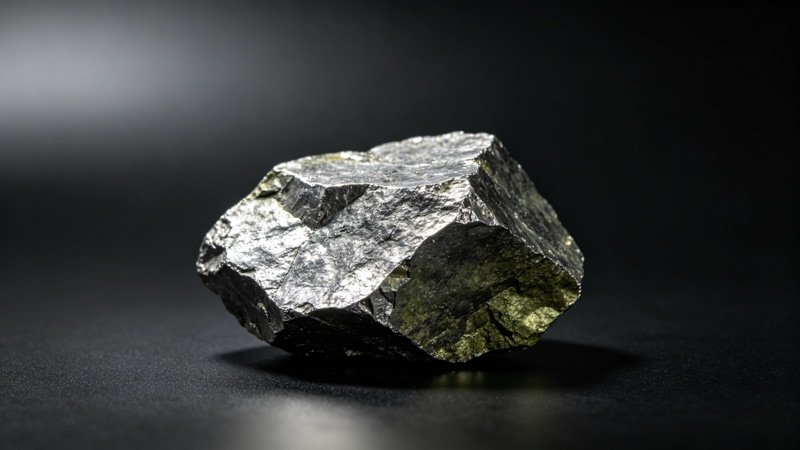
Plutonium is the most important artificial transuranium metal and occupies an irreplaceable position in the nuclear industry. In reactors, uranium-238 captures neutrons and is transformed into plutonium-239; this fissile isotope is both the core material of nuclear weapons and the fuel of fast-neutron breeder reactors, which—while burning plutonium—convert additional uranium-238 into new plutonium, thereby breeding fuel. Because plutonium metal is dense and releases a large amount of heat per unit mass, plutonium-238 is also fabricated into radioisotope thermoelectric generators (RTGs), providing long-lived, reliable power to deep-space probes such as Voyager, Cassini, and the Mars rover Curiosity, as well as to some unmanned polar stations; it is one of the few long-lived power sources available where solar power is impractical. Plutonium must be handled only in strictly controlled nuclear facilities; its toxicity and criticality-safety requirements are extremely demanding, and global inventories are concentrated in the nuclear-industrial systems of a small number of countries.
Plutonium compounds such as plutonium dioxide (PuO2) and plutonium trifluoride (PuF3) are produced only under controlled conditions in nuclear-fuel reprocessing and weapons-material plants, where they are used to fabricate MOX fuel and weapons cores. No ordinary laboratory has any access to weighable quantities of plutonium compounds.