Home/ Elements/ U
Uranium
U 92

Uranium

Uranium is a chemical element; it has symbol U and atomic number 92. It is a silvery-grey metal in the actinide series. A uranium atom has 92 protons and 92 electrons, of which 6 are valence electrons. Uranium is weakly radioactive because all isotopes of uranium are unstable; the half-lives of its naturally occurring isotopes range between 159,200 years and 4.5 billion years. Uranium is the heaviest naturally occurring element. It is used as fuel in nuclear power plants and nuclear weapons. Uranium deposits are mined in Kazakhstan, Canada, Australia, and other countries.

Actinide USGS 2024 008fff
Atomic number 92Z
Atomic mass 238.029u
Valence e⁻ 2
Electron config. 1s2 2s2 2p6 3s2 3p6 4s2 3d10 4p6 5s2 4d10 5p6 6s2 4f14 5d10 6p6 7s2 5f3 6d1
Density
19.1g/cm³
Melting point
1132°C
Crustal abundance
2.7ppm
Annual production
49896tonnes U (2024)
Recycling rate
Nuclear fuel reprocessing

Why This Element

Uranium is Earth's heaviest naturally occurring element and the only one that undergoes sustained nuclear fission with thermal neutrons. Uranium-235 fission releases 82 TJ/kg of energy — 20 million times more than chemical energy from the same mass. This powers 10% of global electricity production and represents one of the most powerful energy sources accessible to humanity.

Applications

Nuclear fuelMilitary

Applications in DepthElement & compound uses

Main Uses of the Element

Uranium is the heaviest primordial element in nature and, to date, the only nuclear-fuel metal deployed at large commercial scale. Its central use is as fuel for nuclear power stations: about 0.7% of natural uranium is fissile uranium-235, which is enriched by gas centrifugation to roughly 3%–5%, fabricated into uranium dioxide pellets, and loaded into fuel assemblies that generate low-carbon baseload electricity in hundreds of reactors around the world, supplying a substantial share of the grid. In the military sphere, uranium-235 or reactor-produced plutonium-239 is the core material of nuclear weapons, a use that drove the build-out of large-scale uranium enrichment and reprocessing industries during the Cold War. The "depleted uranium" left over after enrichment (with a uranium-235 abundance below that of natural uranium) is still radioactive, but its very high density and good mechanical properties have made it useful as ballast for aircraft and helicopters, as ship ballast, as shielding material in radiotherapy equipment, and as penetrator cores in tank armor-piercing ammunition; the latter use is controversial and restricted in several countries. Uranium also has a historical, non-nuclear use: small amounts of uranium oxide added to glass melt produce "uranium glass," which fluoresces yellow-green and was widely used from the nineteenth century through the early twentieth century in decorative glassware, vessels, and tableware. Production ceased long ago, and such pieces now form a specialty category on the collectors' market.

Key Compounds and Their Uses

Uranium dioxide (UO2) is the main form of nuclear fuel pellets and, after sintering, serves for long periods in reactor cores. Triuranium octoxide (U3O8) is the most common oxide form in natural uranium ores (pitchblende) and is the principal component of "yellowcake," the product into which uranium ore concentrates are converted before transport and trade. Uranium hexafluoride (UF6) sublimes at only about 56 °C and is the only conveniently gaseous uranium compound used in gas-centrifuge enrichment; the enriched UF6 is then converted back into uranium dioxide fuel. Uranyl nitrate (UO2(NO3)2) is the key product of the extraction flowsheets in uranium ore milling and front-end fuel processing: uranium is extracted and purified from leach liquor as uranyl nitrate and then converted further into oxides. Other uranium compounds were historically used as colorants in glass and ceramics, but they have now largely disappeared from consumer use.
Element History

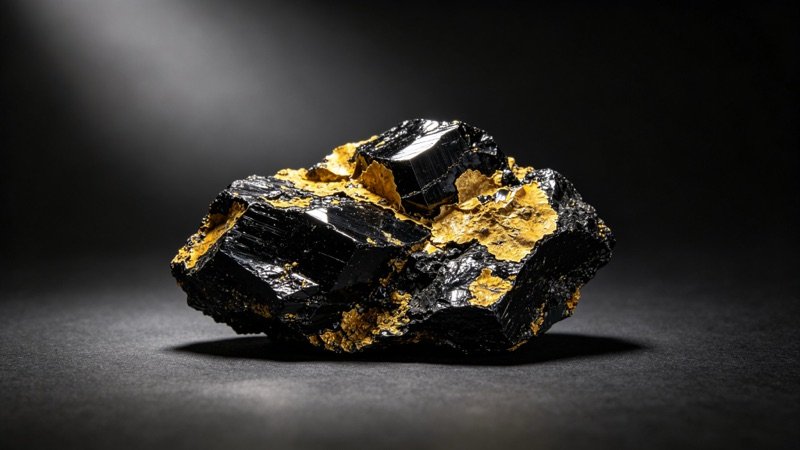
Discovered as pitchblende ore in 1789 by Martin Heinrich Klaproth, who named it after Uranus. Isolated as pure metal in 1841 by Eugène Peligot. Became world-altering when nuclear fission was discovered in 1939 — uranium-235 fuel powers 10% of global electricity production and the world's nuclear arsenal.

Related Elements

Ac · Actinium Th · Thorium Pa · Protactinium Np · Neptunium Pu · Plutonium Am · Americium Cm · Curium Bk · Berkelium

Frequently Asked QuestionsLong-tail Q&A · data-driven

What is the melting point of Uranium?
1132 °C
What is the boiling point of Uranium?
4131 °C
What is the density of Uranium?
19.1 g/cm³
What are the atomic number and category of Uranium?
92 · Actinide
Which ore is Uranium mainly extracted from?
Pitchblende, carnotite
What are the world reserves of Uranium?
8000000 tonnes U (reasonably assured)
What is the annual production of Uranium?
49896 tonnes U (2024)
What are the main uses of Uranium?
Uranium is Earth's heaviest naturally occurring element and the only one that undergoes sustained nuclear fission with thermal neutrons. Uranium-235 fission releases 82 TJ/kg of energy — 20 million times more than chemic
Who discovered Uranium and when?
Martin Heinrich Klaproth · 1896