Home/ Elements/ Cf
Californium
Cf 98

Californium

Californium is a chemical element; it has symbol Cf and atomic number 98. Californium is an actinide element, the sixth transuranium element to be synthesized, and has the second-highest atomic mass of all elements that have been produced in weighable amounts (behind einsteinium). Californium was discovered in 1950 by Stanley Thompson, Albert Ghiorso, and Glenn Seaborg. Californium-252 is a strong neutron emitter and is used in portable neutron sources for metal detection, nuclear reactor start-up, and cancer therapy.

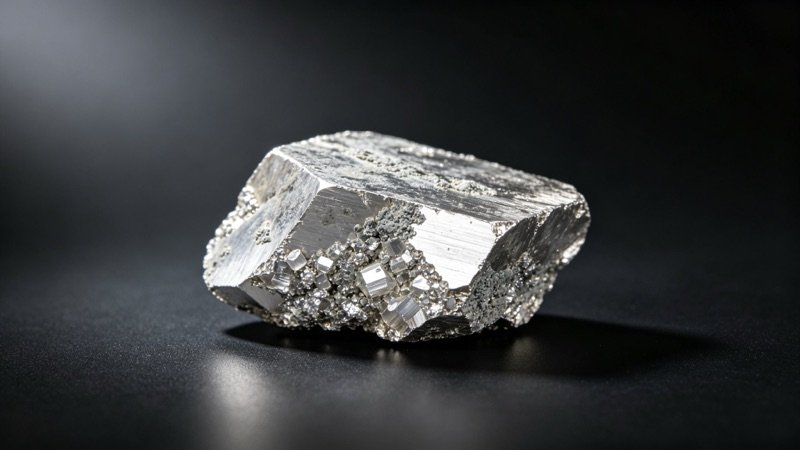
Actinide silvery
Atomic number 98Z
Atomic mass 251u
Valence e⁻ 2
Electron config. 1s2 2s2 2p6 3s2 3p6 4s2 3d10 4p6 5s2 4d10 5p6 6s2 4f14 5d10 6p6 7s2 5f10
Density
15.1g/cm³
Melting point
900°C
Crustal abundance
1e-16ppm
Annual production
Recycling rate
0%(Radioactive element; no established recycling)

Why This Element

Californium has the highest neutron emission rate of any known element — Cf-252 emits 2.3 million neutrons per second per microgram, with a spontaneous fission branching ratio of 3%. This makes it a portable and powerful neutron source for industrial and medical applications without requiring large accelerator facilities.

Applications

Neutron sources

Applications in DepthElement & compound uses

Main Uses of the Element

Californium is one of the few transuranium elements with genuine, dedicated industrial uses; its star isotope is californium-252. It exhibits the unusual property of spontaneous fission: each microgram of californium-252 releases millions of neutrons per second, and when made into a compact neutron source it occupies no more than a grain of rice while delivering a strong, stable neutron beam. Such sources are widely used in the nuclear industry and in instrumentation. In oil-well logging, a californium-252 source is lowered into the borehole, and neutron activation analysis is used to determine formation porosity and oil-water content; nuclear reactors and fuel plants use it as a startup neutron source and for instrument calibration. In medicine, californium-252 neutron brachytherapy is used to treat certain inoperable brain and head-and-neck tumors. It is also used in neutron radiography, explosives detection, and materials activation analysis. Because worldwide annual production is only at the gram scale, californium-252 neutron sources are extremely expensive and are used only where a portable, strong neutron source is genuinely needed.

Key Compounds and Their Uses

Californium compounds such as californium trichloride (CfCl3) and californium dioxide (CfO2) are obtained only by trace-scale separation from a small number of targets irradiated in high-flux reactors, where they are used to prepare californium metal targets and neutron sources. The commercial "californium-252 source" is in reality nothing more than an ultrathin piece of a californium compound sealed in a small metal capsule; no other consumer compound form exists.
Element History

Discovered in 1950 at UC Berkeley by Seaborg, Thompson, Street, and Ghiorso — californium-245 (44-minute half-life) was the first isotope identified. Isolated as pure metal in 1975. No natural occurrence. Cf-252 (2.65-year half-life) is the most useful isotope.

Related Elements

Ac · Actinium Th · Thorium Pa · Protactinium U · Uranium Np · Neptunium Pu · Plutonium Am · Americium Cm · Curium

Frequently Asked QuestionsLong-tail Q&A · data-driven

What is the melting point of Californium?
900 °C
What is the boiling point of Californium?
1470 °C
What is the density of Californium?
15.1 g/cm³
What are the atomic number and category of Californium?
98 · Actinide
Which ore is Californium mainly extracted from?
Nuclear reactor (synthetic)
What are the main uses of Californium?
Californium has the highest neutron emission rate of any known element — Cf-252 emits 2.3 million neutrons per second per microgram, with a spontaneous fission branching ratio of 3%. This makes it a portable and powerful
Who discovered Californium and when?
Lawrence Berkeley National Laboratory · 1950