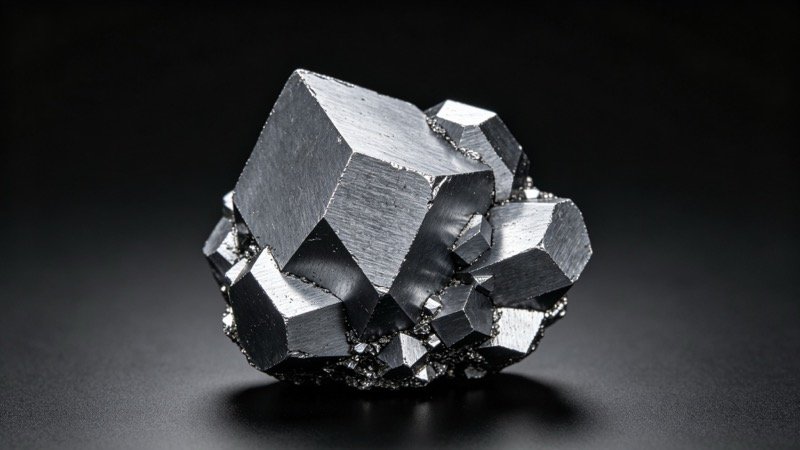
Arsenic is a toxic metalloid with a density of about 5.727. Elemental arsenic itself has limited uses due to its extreme toxicity, but its compounds remain important in semiconductors and alloys. Gallium arsenide GaAs is the most important compound semiconductor, used to make high-frequency devices, microwave integrated circuits, light-emitting diodes LEDs, laser diodes, and solar cells, widely applied in cellphone RF, satellite communications, and space photovoltaics. In alloys, a small addition of arsenic to brass improves hardness and corrosion resistance, forming arsenical brass used in condenser tubes and heat exchangers; lead-arsenic alloys were once used for battery grids and shot, but have been greatly reduced under modern environmental rules. Historically arsenic compounds served as pesticides, wood preservatives, and pigments, but have been strictly restricted or phased out due to toxicity and carcinogenicity. It must be emphasized that arsenic and its inorganic compounds are highly toxic carcinogens, and industrial use requires strict sealed protection.
Arsenic trioxide As2O3 is commonly known as white arsenic, a highly toxic substance historically used as an insecticide and rodenticide; today it is used under strict control in the clinical treatment of acute promyelocytic leukemia. Gallium arsenide GaAs is the most important compound semiconductor, used in RF, optoelectronics, and space solar cells. Arsine AsH3 is a highly toxic gas used as an n-type doping source in the semiconductor industry. Realgar As4S4 and orpiment As2S3 are arsenic-bearing sulfide minerals, traditionally used in Chinese medicine and as painting pigments and now restricted because of their toxicity. Indium arsenide InAs, indium phosphide InP, and indium gallium arsenide InGaAs are used in infrared detectors and high-speed electronic devices. Arsenic acid H3AsO4 and its salts are feedstocks for traditional wood preservatives and herbicides, restricted in most countries because of residual toxicity. Traditional pesticides such as calcium arsenate and lead arsenate have largely been phased out due to residual toxicity.