Home/ Elements/ Ar
Argon
Ar 18

Argon

Argon is a chemical element; it has symbol Ar and atomic number 18. It is in group 18 (noble gases) of the periodic table. It is the third most abundant gas in Earth's atmosphere, at 0.934%. Argon is a colorless, odorless, non-flammable gas at room temperature. In industry, argon is used as an inert shielding gas in welding and other high-temperature industrial processes, in incandescent light bulbs, and to preserve documents and artifacts in museums.

Noble Gas colorless gas exhibiting a li...
Atomic number 18Z
Atomic mass 39.948u
Valence e⁻ 8
Electron config. 1s2 2s2 2p6 3s2 3p6
Density
1.78g/cm³
Melting point
-189°C
Crustal abundance
3.5ppm
Annual production
—
Recycling rate
A component of air, regenerated by air fractionation

Why This Element

Argon's combination of near-zero thermal conductivity, complete chemical inertness, and moderate density makes it the premier choice for insulating windows, welding shield gas, and LED lighting — applications where no substitute offers the same cost-effectiveness and performance.

Applications

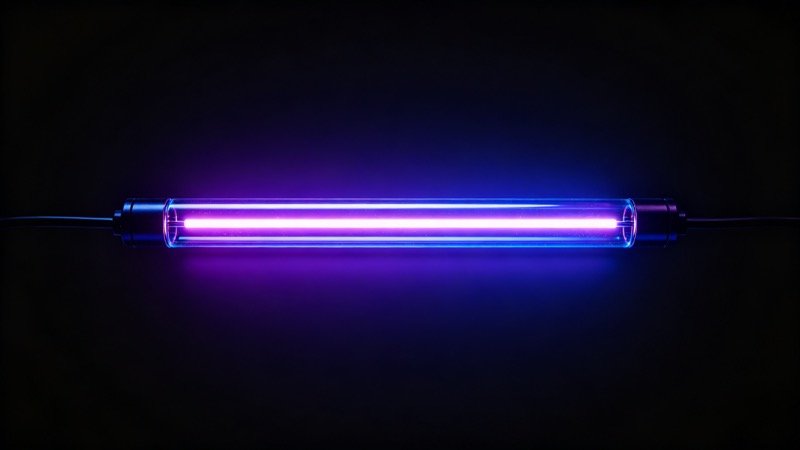
Welding shielding gasLamp fillingGlass processingMetallurgyLaboratory atmospheres

Applications in DepthElement & compound uses

Main Uses of the Element

Argon is the most abundant noble gas in air, making up about one percent of its volume, with a density of about 1.784 g/L and a melting point around −189 °C; its extreme chemical inertness makes it a widely used inert shielding gas. In welding, gas tungsten arc welding uses argon to exclude air, protecting reactive metals such as stainless steel, aluminum, and titanium from oxidation at high temperatures, widely applied to pressure vessels, piping, aerospace, and precision structural welding. In lighting, argon is filled into incandescent and fluorescent lamps to slow tungsten evaporation and extend lamp life. In semiconductor manufacturing, argon is used in crystal growth, plasma etching, and ion implantation, an indispensable process gas for chip fabrication. It also serves in argon-oxygen decarburization AOD furnaces for stainless steel refining, modified-atmosphere preservation of artifacts, and specialty lamp filling.

Key Compounds and Their Uses

Argon is a noble gas with a saturated outer electron shell and forms almost no stable compounds with any element, so it has no common compounds in the traditional sense. Industrially it is used directly as elemental gas, stored in steel cylinders or Dewar flasks, with liquid argon used for cryogenic storage and transport. A very few argon compounds synthesized under extreme conditions, such as argon fluorohydride HArF, exist only in low-temperature matrices and are used solely in basic research, never entering civilian products.
Element History

Discovered in 1894 by Lord Rayleigh and William Ramsay during fractional distillation of liquid air — the first noble gas found on Earth (helium had been detected in the Sun 26 years earlier). Argon accounts for roughly 1% of Earth's atmosphere by volume, making it the third-most-abundant atmospheric gas. Production is entirely byproduct of cryogenic air distillation for oxygen and nitrogen.

Related Elements

He · Helium Ne · Neon Kr · Krypton Xe · Xenon Rn · Radon Og · Oganesson

Frequently Asked QuestionsLong-tail Q&A · data-driven

What is the melting point of Argon?
-189 °C
What is the boiling point of Argon?
-186 °C
What is the density of Argon?
1.78 g/cm³
What are the atomic number and category of Argon?
18 · Noble Gas
Which ore is Argon mainly extracted from?
none — atmospheric air
What are the main uses of Argon?
Argon's combination of near-zero thermal conductivity, complete chemical inertness, and moderate density makes it the premier choice for insulating windows, welding shield gas, and LED lighting — applications where no su
Who discovered Argon and when?
Lord Rayleigh · Ancient (known since antiquity)