Home/ Elements/ He
Helium
He 2

Helium

Helium (from Ancient Greek ἥλιος, helios, 'sun') is a chemical element; it has symbol He and atomic number 2. It is a colorless, odorless, non-toxic, inert, monatomic gas and the first in the noble gas group of the periodic table. Its boiling and melting points are the lowest among all elements. Helium is used as a cryogenic coolant in MRI scanners and particle accelerators, as well as a protective gas in rocket propulsion and deep-sea diving mixtures.

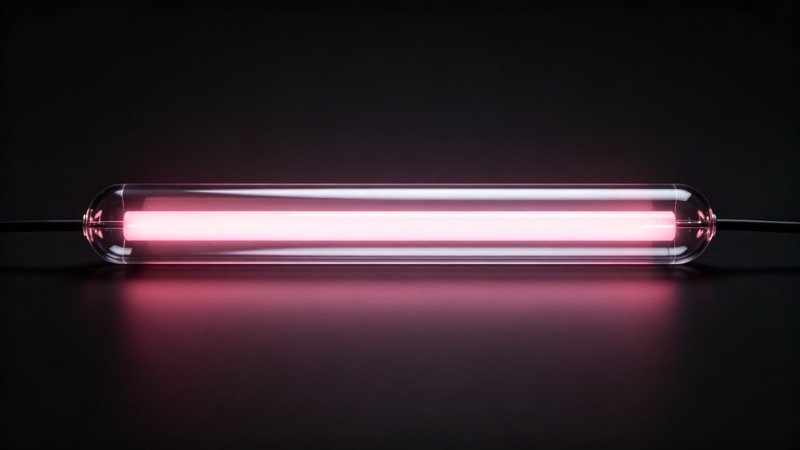
Noble Gas colorless gas, exhibiting a r...
Atomic number 2Z
Atomic mass 4.003u
Valence e⁻ 2
Electron config. 1s2
Density
0.18g/cm³
Melting point
-272°C
Crustal abundance
0.008ppm
Annual production
Recycling rate
Byproduct of natural gas processing; usually vented and unrecoverable

Why This Element

Helium is the only element that cannot be solidified by cooling alone at standard pressure — it remains liquid down to absolute zero and becomes a superfluid below 2.17 K. Its low density and non-flammability make it indispensable for lifting applications, while its extreme cryogenic properties enable superconducting technologies critical to medical imaging and scientific research.

Applications

Cryogenic superconductionMRINMRWelding shielding gasLeak detection

Applications in DepthElement & compound uses

Main Uses of the Element

Helium is the second-lightest element after hydrogen and the lowest-boiling, hardest-to-liquefy element of all, a colorless, odorless inert gas at room temperature with extraordinarily stable chemistry. Its largest high-end use is cryogenic cooling: liquid helium boils close to absolute zero and is the only practical coolant for superconducting magnets in hospital MRI scanners, particle accelerators, quantum-computing experiments and large research installations, without which these devices cannot operate. In deep-sea and saturation diving, helium-oxygen breathing mixtures replace nitrogen to prevent nitrogen narcosis and shorten decompression time, and are widely used on offshore oil and gas platforms and in salvage operations.

In welding, helium's inertness and high thermal conductivity make it the preferred shielding gas for arc welding aluminum alloys, stainless steel, copper and magnesium, as well as for the inert atmosphere used in semiconductor crystal growth and optical fiber drawing. Because helium atoms are tiny and chemically inert, it is also the gold-standard tracer gas for leak detection on air conditioners, refrigerators, gas cylinders, and welded joints of aircraft and spacecraft. In daily life, helium fills party balloons, blimps and inflatable toys: its density far below air gives buoyancy, and unlike hydrogen it does not burn. Helium is preferred precisely because it has an extremely low boiling point and extreme chemical inertness, remaining unreactive even at cryogenic extremes and around highly reactive metals.

Key Compounds and Their Uses

Helium is a noble gas with a closed electron shell and extraordinarily stable chemistry; it forms almost no stable neutral compounds at all, so its industrial and civilian value comes almost entirely from the physical properties of the elemental gas itself—low density, low boiling point and chemical inertness. The only known helium species appear under extreme cryogenic, high-pressure or matrix-isolated laboratory conditions, such as hypothetical helium difluoride-type molecules and clathrates; they are unstable at ordinary temperature and pressure and have no practical use. What the market calls "helium compounds" generally refers to gas mixtures containing helium or products filled with helium, not chemical compounds in the strict sense.
Element History

Discovered in 1868 by Janssen and Lockyer via solar spectroscopy — the first element found extraterrestrially before being isolated on Earth. Ramsey obtained it from cleveite in 1895. Now recovered commercially from natural gas wells (≈7% of global supply comes from Qatar, US, and Algeria).

Related Elements

Ne · Neon Ar · Argon Kr · Krypton Xe · Xenon Rn · Radon Og · Oganesson

Frequently Asked QuestionsLong-tail Q&A · data-driven

What is the melting point of Helium?
-272 °C
What is the boiling point of Helium?
-269 °C
What is the density of Helium?
0.18 g/cm³
What are the atomic number and category of Helium?
2 · Noble Gas
Which ore is Helium mainly extracted from?
natural gas fields (helium-bearing)
What are the main uses of Helium?
Helium is the only element that cannot be solidified by cooling alone at standard pressure — it remains liquid down to absolute zero and becomes a superfluid below 2.17 K. Its low density and non-flammability make it ind
Who discovered Helium and when?
Pierre Janssen · Ancient (known since antiquity)