Home/ Elements/ Xe
Xenon
Xe 54

Xenon

Xenon is a chemical element; it has symbol Xe and atomic number 54. It is a dense, colorless, odorless noble gas found in Earth's atmosphere in trace amounts. Although generally unreactive, xenon can undergo a few chemical reactions such as the formation of xenon hexafluoroplatinate, the first noble gas compound to be synthesized. Xenon is used in high-intensity lamps (stroboscopes, photographic flashes), anesthesia, ion propulsion systems, and as a general anesthetic.

Noble Gas colorless gas, exhibiting a b...
Atomic number 54Z
Atomic mass 131.294u
Valence e⁻ 8
Electron config. 1s2 2s2 2p6 3s2 3p6 4s2 3d10 4p6 5s2 4d10 5p6
Density
5.89g/cm³
Melting point
-112°C
Crustal abundance
3e-05ppm
Annual production
—
Recycling rate
A component of air, regenerated by air fractionation

Why This Element

Xenon combines noble gas inertness with the ability to form stable compounds under mild conditions — a unique property that enables its use as a propellant for ion thrusters (critical to satellite station-keeping) and in flash lamp technology. Xenon's broad emission spectrum also makes it ideal for medical imaging and high-intensity lighting.

Applications

LightingPlasma displaysMedical anesthesiaIon propulsionNuclear detection

Applications in DepthElement & compound uses

Main Uses of the Element

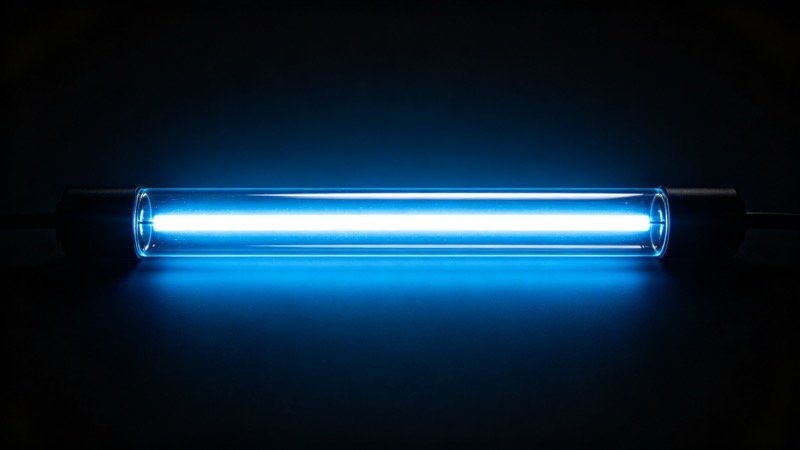
Xenon is a noble gas with gas density 5.894 g/L and melting point −112 °C; present in air at only trace levels, it is extracted by cryogenic distillation of liquid air, yet its unique luminescence and ionization properties make it irreplaceable in several high-end fields. Illumination is its traditional use: high-pressure xenon lamps emit near-sunlight color at high correlated color temperature and excellent color rendering, so they dominate cinema projectors, automotive HID headlamps, operating-room lights and searchlights; xenon flash tubes power photographic fill, stroboscopic tachometry and laser pumping. In aerospace, xenon ion thrusters use xenon as propellant, ionizing it and accelerating the ions through high-voltage grids; with specific impulse far above chemical rockets and low but months-long thrust, they have become standard for station keeping on communications satellites and for deep-space probes. In medicine, xenon was studied as an inhaled anesthetic because it is potent, fast on and off, and minimally affects circulation. Liquid xenon, with its high density and high scintillation yield, is the target material for time-projection chambers in dark-matter direct-detection and neutrino experiments. Xenon also feeds excimer lasers and particle-physics detectors.

Key Compounds and Their Uses

Xenon was long thought to be completely inert until the first noble-gas compound was synthesized in 1962. Xenon difluoride (XeF2), the most accessible and studied xenon compound, is a white crystal that hydrolyzes slowly in water; in semiconductor fabs it serves as a selective etchant for silicon and silicon dioxide, and as a fluorinating and oxidizing reagent. Xenon tetrafluoride (XeF4) and xenon hexafluoride (XeF6) are strong fluorinating agents; XeF6 is used in nuclear-fuel reprocessing to convert uranium into volatile uranium hexafluoride for gas-centrifuge isotope separation. Xenon trioxide (XeO3) is a powerful oxidizer and sensitive explosive that survives only briefly in aqueous solution and is used mainly in laboratory oxidation chemistry. Perxenates such as sodium perxenate (Na4XeO6) rank among the strongest solid oxidizers known. Excimers such as XeCl and XeF are the gain media of excimer lasers used in semiconductor lithography and ophthalmic surgery.
Element History

Discovered in 1898 by William Ramsay and Morris Travers during fractional distillation of liquid air. First noble gas found to form compounds: xenon tetrafluoride (XeF₄) was synthesized in 1962, establishing xenon as the most chemically reactive noble gas with 40+ known compounds. Present in Earth's atmosphere at only 0.086 ppm volume fraction.

Related Elements

He · Helium Ne · Neon Ar · Argon Kr · Krypton Rn · Radon Og · Oganesson

Frequently Asked QuestionsLong-tail Q&A · data-driven

What is the melting point of Xenon?
-112 °C
What is the boiling point of Xenon?
-108 °C
What is the density of Xenon?
5.89 g/cm³
What are the atomic number and category of Xenon?
54 · Noble Gas
Which ore is Xenon mainly extracted from?
none — atmospheric air
What are the main uses of Xenon?
Xenon combines noble gas inertness with the ability to form stable compounds under mild conditions — a unique property that enables its use as a propellant for ion thrusters (critical to satellite station-keeping) and in
Who discovered Xenon and when?
William Ramsay · Ancient (known since antiquity)