Home/ Elements/ Sc
Scandium
Sc 21

Scandium

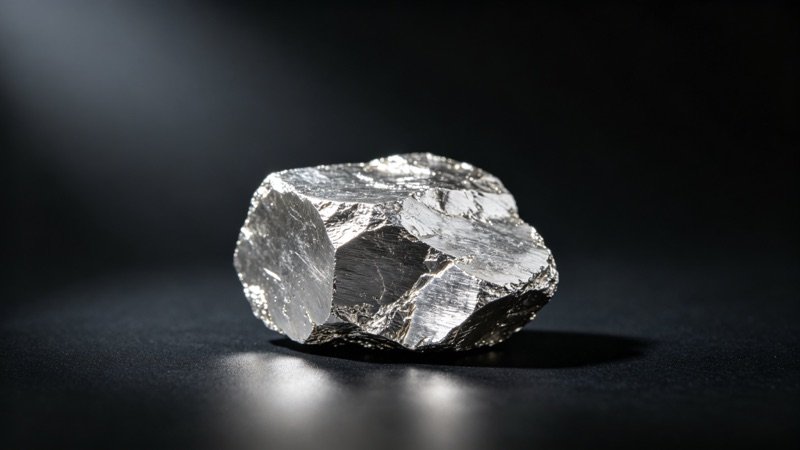
Scandium is a chemical element; it has symbol Sc and atomic number 21. It is a silvery-white metallic element found in the d-block of the periodic table. Usually, it is classified as a rare-earth element, together with yttrium and the lanthanides. It was discovered in 1879 by spectral analysis of the minerals euxenite and gadolinite from Scandinavia. Scandium is used in high-intensity metal halide lamps, aluminum-scandium alloys for aerospace components and sports equipment, and research in ionic liquids.

Transition Metal USGS 2025 silvery white
Atomic number 21Z
Atomic mass 44.956u
Valence e⁻ 2
Electron config. 1s2 2s2 2p6 3s2 3p6 4s2 3d1
Density
2.98g/cm³
Melting point
1541°C
Crustal abundance
22.0ppm
Annual production
13tonnes Sc2O3
Recycling rate
0%(Low recycling rate; small specialty market, limited recovery from scrap)

Why This Element

Scandium is the lightest transition metal (2.99 g/cm³) and forms alloys with aluminum that are simultaneously stronger than steel and 45% lighter than aluminum. Its rarity (0.0005% of Earth's crust) makes it expensive — but its superior properties in aerospace and high-performance sports equipment justify its premium price.

Applications

Aluminum alloysSolid oxide fuel cells

Applications in DepthElement & compound uses

Main Uses of the Element

Scandium is a dispersed metal whose crustal abundance is not especially low yet is extremely dispersed; output is tiny and prices are high, so it has always remained a strategic material reserved for critical roles. Its most mature use is as a trace alloying element in aluminum alloys: adding a few thousandths of scandium to aluminum markedly refines the grains, raises strength and weldability, and suppresses recrystallization; these aluminum-scandium alloys are used in some military aircraft structural parts and aerospace rocket tanks, and are also gradually moving into high-end sports equipment such as bicycle frames, baseball bats and tent poles. In the energy field, scandia-stabilized zirconia used as the electrolyte of solid oxide fuel cells (SOFCs) can generate power efficiently at medium-high temperatures and is regarded as an important direction for clean distributed power. In addition, scandium halides are used in metal halide lamps; the high-efficacy, high-color-rendering scandium-sodium lamps are commonly used in stadiums and large factory halls. Scandium is irreplaceable despite its small consumption because trace additions bring a step change in alloy performance, and because it forms no independent ore deposit and can only be recovered as a trace by-product from uranium, titanium and tungsten ores.

Key Compounds and Their Uses

Scandium oxide (Sc2O3) is the principal scandium compound, a white powder that is the starting material for preparing metallic scandium, scandium-aluminum alloys and SOFC electrolytes, and is also used in specialty glass and electronic ceramics. Scandium chloride (ScCl3) is an intermediate in the hydrometallurgical extraction of scandium and in preparing other scandium compounds, and is used in materials research as a catalyst and as a Lewis acid reagent in organic synthesis. Scandium fluoride (ScF3) is used mainly to prepare the discharge-fill materials of metal halide lamps and specialty optical glass; it also exhibits an unusual low thermal-expansion behavior and is of interest in precision optics and low-expansion materials research. Because scandium itself is produced in extremely small quantities, the global consumption of these compounds is all measured in kilograms, making them typical high-priced niche chemicals. Scandium forms almost no independent ore deposits in nature; industrially it is recovered mainly as a by-product from the leachates of uranium ores, tungsten ores and bauxite red mud, which has long kept its compounds expensive and traded by the kilogram or even gram.
Element History

Discovered in 1879 by Lars Fredrik Nilson (Sweden) via spectroscopy while searching for germanium in rare-earth mineral samples. Metallic scandium was not produced until 1937, and commercial production began only in the 1970s from uranium mine tailings and rare-earth ores.

Related Elements

Ti · Titanium V · Vanadium Cr · Chromium Mn · Manganese Fe · Iron Co · Cobalt Ni · Nickel Cu · Copper

Frequently Asked QuestionsLong-tail Q&A · data-driven

What is the melting point of Scandium?
1541 °C
What is the boiling point of Scandium?
2836 °C
What is the density of Scandium?
2.98 g/cm³
What are the atomic number and category of Scandium?
21 · Transition Metal
Which ore is Scandium mainly extracted from?
Xenotime
What are the world reserves of Scandium?
20000 tonnes
What is the annual production of Scandium?
13 tonnes Sc2O3
What are the main uses of Scandium?
Scandium is the lightest transition metal (2.99 g/cm³) and forms alloys with aluminum that are simultaneously stronger than steel and 45% lighter than aluminum. Its rarity (0.0005% of Earth's crust) makes it expensive —
Who discovered Scandium and when?
Lars Fredrik Nilson · 1879