Titanium is the space-age and ocean-going metal that rose to prominence in the second half of the twentieth century; its density is about 60% that of steel, yet its strength is comparable to ordinary steel, and it is almost rust-proof, making it one of the best-rounded structural metals. Aerospace is its traditional stronghold: aircraft fuselage skins, landing gear, engine compressor disks and blades, and high-pressure gas cylinders and structural parts of rockets and missiles make heavy use of titanium alloys, because at elevated temperatures they are stronger than aluminum alloys and lighter than steel. In medicine, titanium is well tolerated by human tissue and does not trigger rejection, making it the material of choice for hip and knee joints, bone plates and screws, and dental implants. The chemical and marine-equipment industries exploit its outstanding corrosion resistance: desalination units, petrochemical reactors, flue-gas desulfurization piping and heat-exchange equipment on offshore drilling platforms can remain rust-free for long periods in seawater and acid–alkali environments. In daily life, titanium-alloy eyeglass frames, golf club heads, bicycle frames and high-end watch cases are becoming increasingly common. Its high price is justified: extraction and processing are energy-intensive and complex, but in applications that demand weight reduction, corrosion resistance and biocompatibility, where there is no substitute, the cost is worth paying.
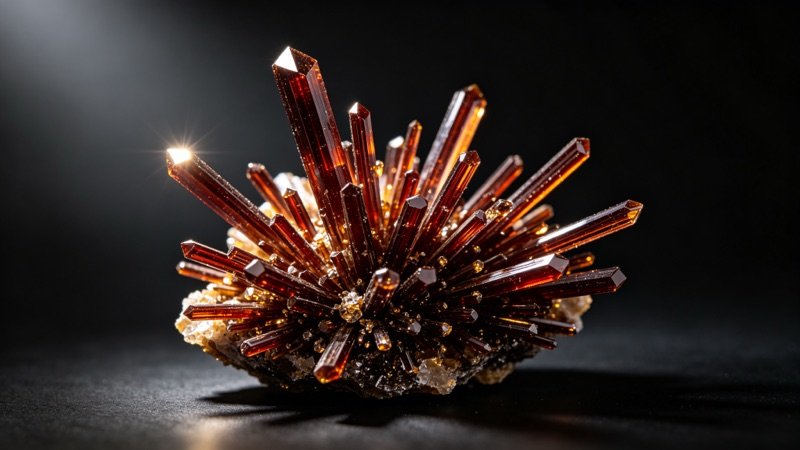
Titanium dioxide (TiO2), commonly called titanium white, is the whitest substance in the world; it has strong hiding power, is non-toxic and weather-resistant, and nearly all white pigments in paints, plastics, paper, inks and chemical fibers rely on it, and it is also used in large quantities in sunscreens and toothpastes; nanoscale titanium dioxide is further used in photocatalytic self-cleaning coatings and lithium-battery anodes. Titanium tetrachloride (TiCl4) is the key intermediate in the chloride-process production of titanium sponge and titanium dioxide; its property of emitting white fumes on contact with moist air was once used to make smoke-screen grenades, and it is now also the feedstock for organotitanium catalysts and titanate coupling agents. Ilmenite (FeTiO3), together with rutile (TiO2), is one of the principal primary titanium ores, distributed mainly in Australia, South Africa and Panzhihua, China; after electric-furnace smelting or the sulfate and chloride processes, it yields titanium dioxide and metallic titanium, forming the raw-material basis of the entire titanium industry. The vanadium-titanium magnetite in the Panzhihua-Xichang region of China is co-rich in both titanium and vanadium; separation via blast furnace and electric furnace allows the integrated recovery of these two strategic metals, making it China's principal base of titanium resources.