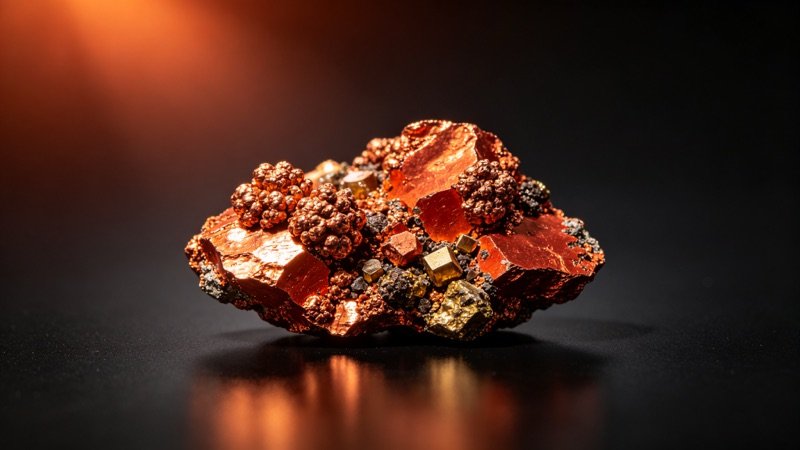
Copper is one of the earliest metals used by humanity and remains the cornerstone of the modern electrical and electronics industry, because its electrical and thermal conductivity are second only to silver among common metals, while its reserves and cost are far more favorable. Electrical use is copper's largest outlet: from power stations through substations to wall sockets, power cables, transformer windings, busbars and motor windings all rely on copper as the conductor, and a single city's power grid consumes copper on the order of tens of thousands of tonnes. The construction industry uses large quantities of copper tubes, plumbing pipes and fittings; thanks to its antibacterial action, durability and recyclability, copper is the material of choice for high-end water supply and drainage and HVAC systems. Electronics are even more dependent on it—copper foil in printed circuit boards, lead frames, connectors and heat-spreader substrates mean that copper is inside almost every electronic device. For heat dissipation and heat exchange, air conditioners, refrigerators, computer heat sinks and automotive radiators commonly use copper or copper alloys because they conduct heat quickly and are easy to fabricate. In addition, brass (copper-zinc) goes into taps, valves, musical instruments and hardware; bronze into bearings, gears and artwork. With the rise of electric vehicles and charging piles, copper use per vehicle is markedly higher than in conventional gasoline cars, and the expansion of grids and energy storage continues to pull copper demand. Copper is also highly recyclable, with a large share of global supply coming from secondary copper, making it a flagship metal of the circular economy.
CuFeS2, i.e. chalcopyrite, is the most abundant and most processed copper ore in nature; through flotation, smelting and pyrofining it produces blister copper, which is then electrorefined to cathode copper. Cu2S, i.e. chalcocite, is a high-grade secondary copper ore that commonly accompanies chalcopyrite and is also one of the feedstocks for pyrometallurgical copper smelting. Copper(II) oxide (CuO), a black powder, is used as a colorant in glass and ceramics and as an organic-synthesis catalyst, and is also a raw material for preparing other copper salts. Copper(II) sulfate (CuSO4) usually appears as the pentahydrate (blue vitriol/chalcanthite); it is the main ingredient of Bordeaux mixture, used as an agricultural fungicide and for aquaculture disinfection, and also for copper electroplating, ore-flotation reagents and trace-element additives in animal feed.