Home/ Elements/ I
Iodine
I 53

Iodine

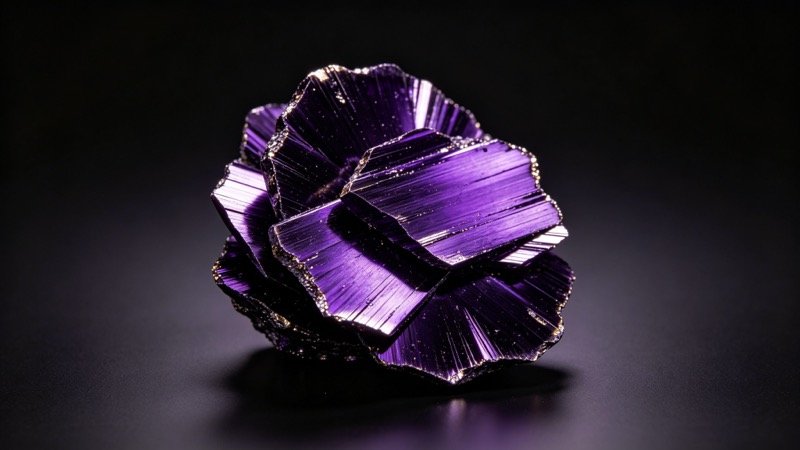
Iodine is a chemical element; it has symbol I and atomic number 53. The heaviest of the stable halogens, it exists as a semi-lustrous, non-metallic solid at standard conditions that melts to form a deep violet liquid at 114 °C, and boils to a violet gas at 184 °C. The element was discovered by the French chemist Bernard Courtois in 1811. Iodine is essential to the human body, being used in the production of thyroid hormones. It is used in antiseptics, iodized salt to prevent iodine deficiency disorders, and as a catalyst in some industrial processes.

Halogen lustrous metallic gray, viole...
Atomic number 53Z
Atomic mass 126.904u
Valence e⁻ 7
Electron config. 1s2 2s2 2p6 3s2 3p6 4s2 3d10 4p6 5s2 4d10 5p5
Density
4.93g/cm³
Melting point
114°C
Crustal abundance
0.45ppm
Annual production
Recycling rate
Mainly extracted from brines and caliche nitrate deposits

Why This Element

Iodine is an essential micronutrient for human thyroid function (thyroxine synthesis requires iodine) and one of the most widely used elements in medical diagnostics and disinfection. Its industrial value stems from radioiodine's role in thyroid cancer treatment and its use as a contrast agent in CT scans, plus its long history as a topical antiseptic.

Applications

DisinfectantsContrast agentsThyroid medicationSemiconductor lightingCatalysts

Applications in DepthElement & compound uses

Main Uses of the Element

Iodine is a purple-black nonmetal solid, density 4.933 g/cm³, melting point 114 °C, readily subliming into violet vapor at room temperature. Virtually all of its downstream uses revolve around two lines: an essential human trace element, and disinfection. The oldest and steadiest application is iodized salt, in which potassium iodide or potassium iodate prevents goiter and cretinism from iodine deficiency, one of the most successful trace-element programs in public health history. In medicine, alcoholic iodine solution and povidone-iodine (iodophor) are standard for preoperative skin prep, wound care and mucosal irrigation; the iodophor is gentle on tissue with a broad biocidal spectrum and remains the hospital's most used skin antiseptic. Industrially, iodine-based alignment chemistry turns PVA film into polarizers for LCD panels, a key chemical in the flat-display supply chain, and organic iodinated contrast media make blood vessels and organs visible on X-ray during CT. In the lab, the iodine clock reaction is a classic chemical-dynamics demonstration. Iodine also enters animal feed supplements, photographic emulsions and certain laser gain media.

Key Compounds and Their Uses

Potassium iodide (KI) and potassium iodate (KIO3) are the two standard iodine sources in table salt: KI is stable but oxidizes, KIO3 suits humid climates, and both are added at microgram levels to supply the daily raw material for thyroid hormone. Povidone-iodine (PVP-I) is a complex of iodine with polyvinylpyrrolidone that slowly releases free iodine in water and alcohol, covers bacteria, fungi and viruses with far less irritation than tincture of iodine, and dominates surgical scrub, wound disinfection and gynecological irrigation. Sodium iodide (NaI), especially thallium-activated NaI(Tl), is the classic scintillator in nuclear medicine and radiation detection, converting gamma rays into visible light for PET/SPECT cameras and environmental monitoring. iohexol and iopamidol are triiodinated benzene contrast agents that circulate with the blood during CT enhancement and make vessels, cardiac chambers and tumor boundaries sharply visible. Silver iodide (AgI) is the standard cold-cloud seeding agent: its crystal closely matches ice, so dropping it into clouds nucleates supercooled droplets into ice crystals for rain or snow enhancement.
Element History

Discovered in 1811 by French chemist Bernard Courtois while processing seaweed ash for saltpeter — he noted a violet vapor condensing on copper vessels, identifying a new element. Named by Humphry Davy two years later. Produced primarily from brine wells in Japan, Chile (caliche nitrate deposits), and the US Great Salt Lake.

Related Elements

F · Fluorine Cl · Chlorine Br · Bromine At · Astatine Ts · Tennessine

Frequently Asked QuestionsLong-tail Q&A · data-driven

What is the melting point of Iodine?
114 °C
What is the boiling point of Iodine?
184 °C
What is the density of Iodine?
4.93 g/cm³
What are the atomic number and category of Iodine?
53 · Halogen
Which ore is Iodine mainly extracted from?
brine (iodide), caliche
What are the main uses of Iodine?
Iodine is an essential micronutrient for human thyroid function (thyroxine synthesis requires iodine) and one of the most widely used elements in medical diagnostics and disinfection. Its industrial value stems from radi
Who discovered Iodine and when?
Bernard Courtois · Ancient (known since antiquity)