Home/ Elements/ At
Astatine
At 85

Astatine

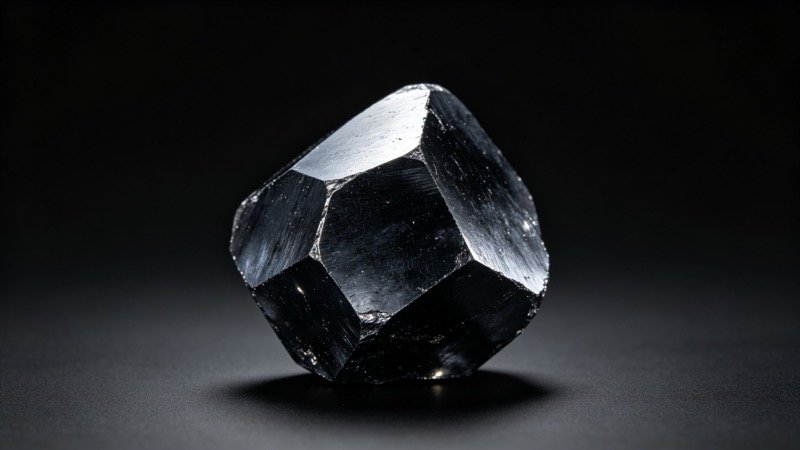
Astatine is a chemical element; it has symbol At and atomic number 85. It is the rarest naturally occurring element in the Earth's crust, occurring only as the decay product of various heavier elements. All of astatine's isotopes are short-lived; the most stable is astatine-210, with a half-life of 8.1 hours. Astatine was first produced by bombarding bismuth-209 with energetic alpha particles in 1940. Very little is known about astatine's properties due to its extreme rarity and high radioactivity. It is being investigated for use in targeted cancer therapy.

Halogen unknown, probably metallic
Atomic number 85Z
Atomic mass 210u
Valence e⁻ 7
Electron config. 1s2 2s2 2p6 3s2 3p6 4s2 3d10 4p6 5s2 4d10 5p6 6s2 4f14 5d10 6p5
Density
6.35g/cm³
Melting point
302°C
Crustal abundance
—
Annual production
—
Recycling rate
Synthesized on demand; no recycling concept

Why This Element

Astatine is Earth's rarest naturally occurring element (~25 g total on Earth at any moment, all from uranium/thorium decay chains) and highly radioactive with no stable isotopes. Its potential medical use as an alpha-emitting targeted cancer therapy agent represents its primary interest — At-211 has high LET radiation that could selectively kill tumor cells.

Applications

Nuclear medicine experimentsScientific research

Applications in DepthElement & compound uses

Main Uses of the Element

Astatine is the heaviest halogen, with an estimated density of about 6.35 g/cm³ and melting point around 302 °C. It exists only in trace amounts in the crust, every isotope is strongly radioactive, and the longest-lived half-life is only about 8.5 hours. It can be produced only in trace quantities by bombarding a bismuth target with alpha particles in an accelerator; it never forms an ore body. It therefore has no industrial or civilian use and enters no consumer product. Today astatine serves only as a target for nuclear physics and radiochemistry research; because its alpha particles are high in energy but short in range, At-211 is being explored for targeted alpha therapy, though it remains at the preclinical stage.

Key Compounds and Their Uses

Astatine compounds such as hydrogen astatide (HAt) and silver astatide (AgAt) can only be synthesized at tracer levels in radiochemical experiments, have never been isolated in weighable amounts, and have no industrial or commercial use. They are studied only to probe bonding trends among the heavy halogens with hydrogen, metals and other halogens.

Element History

The rarest naturally occurring element on Earth — less than 25 grams total exist at any given moment from natural decay chains. First synthetically produced in 1940 by bombarding bismuth-209 with alpha particles to form astatine-211 (7.2-hour half-life). No stable isotopes exist; the longest-lived, At-210, has an 8.1-hour half-life.

Related Elements

F · Fluorine Cl · Chlorine Br · Bromine I · Iodine Ts · Tennessine

Frequently Asked QuestionsLong-tail Q&A · data-driven

What is the melting point of Astatine?
302 °C
What is the boiling point of Astatine?
337 °C
What is the density of Astatine?
6.35 g/cm³
What are the atomic number and category of Astatine?
85 · Halogen
Which ore is Astatine mainly extracted from?
none — decay trace, synthesized
What are the main uses of Astatine?
Astatine is Earth's rarest naturally occurring element (~25 g total on Earth at any moment, all from uranium/thorium decay chains) and highly radioactive with no stable isotopes. Its potential medical use as an alpha-emi
Who discovered Astatine and when?
Dale R. Corson · Ancient (known since antiquity)