Home/ Elements/ Es
Einsteinium
Es 99

Einsteinium

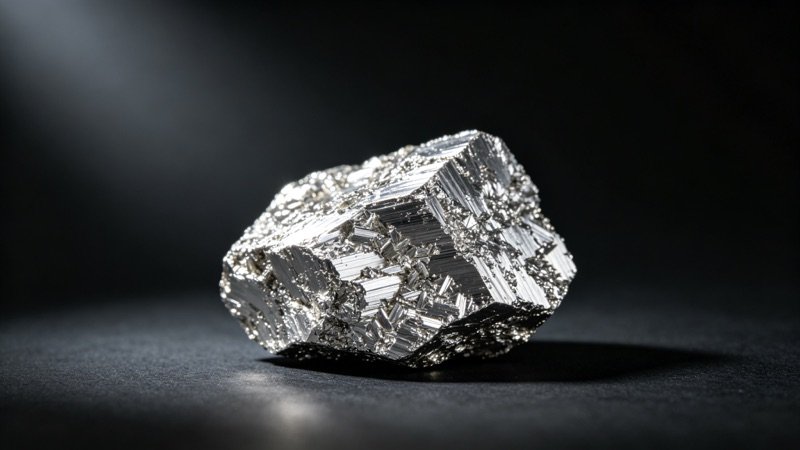
Einsteinium is a synthetic chemical element; it has symbol Es and atomic number 99. It is the seventh transuranic element. Einsteinium was discovered as a component of the debris of the first hydrogen bomb explosion in 1952, and named in honor of Albert Einstein. Einsteinium is a soft, silvery-white radioactive metal. Due to its scarcity, einsteinium has no known practical uses outside of scientific research.

Actinide silver-colored
Atomic number 99Z
Atomic mass 252u
Valence e⁻ 2
Electron config. 1s2 2s2 2p6 3s2 3p6 4s2 3d10 4p6 5s2 4d10 5p6 6s2 4f14 5d10 6p6 7s2 5f11
Density
8.84g/cm³
Melting point
860°C
Crustal abundance
1e-16ppm
Annual production
Recycling rate
0%(Radioactive synthetic element; no recycling)

Why This Element

Einsteinium has no commercial applications beyond fundamental research — it is the heaviest element that can be produced in macroscopic quantities (~0.001 g annually). Es-253 and Es-254 are used as alpha sources and as target material for superheavy element synthesis.

Applications

Research

Applications in DepthElement & compound uses

Main Uses of the Element

Einsteinium is the actinide element with atomic number 99, first isolated and identified in 1952 by teams from Berkeley and Argonne Laboratories within the radioactive fallout of the first U.S. hydrogen bomb test. All of its isotopes have very short half-lives, it does not occur in nature, and it can only be produced atom by atom in high-flux reactors or accelerators, in vanishingly small amounts at a time. It therefore has no industrial or civilian uses and is currently studied only as a research object for the nuclear physics and chemistry of transuranium elements.

Key Compounds and Their Uses

Einsteinium compounds such as einsteinium(III) oxide (Es2O3) and einsteinium(III) chloride (EsCl3) have only ever been prepared in the laboratory on the scale of single atoms to microgram quantities, to determine their oxidation states and actinide periodic behavior; they have never been produced on any scale nor appear in any civilian product.

Element History

Discovered in 1952 by Albert Ghiorso and his team while analyzing debris from the Ivy Mike thermonuclear test (October 31, 1952) — einsteinium-252 (20.5-day half-life) was identified in uranium fallout. Named for Einstein. Isolated in 1953. First element discovered from nuclear explosion debris.

Related Elements

Ac · Actinium Th · Thorium Pa · Protactinium U · Uranium Np · Neptunium Pu · Plutonium Am · Americium Cm · Curium

Frequently Asked QuestionsLong-tail Q&A · data-driven

What is the melting point of Einsteinium?
860 °C
What is the boiling point of Einsteinium?
996 °C
What is the density of Einsteinium?
8.84 g/cm³
What are the atomic number and category of Einsteinium?
99 · Actinide
Which ore is Einsteinium mainly extracted from?
Nuclear reactor (synthetic)
What are the main uses of Einsteinium?
Einsteinium has no commercial applications beyond fundamental research — it is the heaviest element that can be produced in macroscopic quantities (~0.001 g annually). Es-253 and Es-254 are used as alpha sources and as t
Who discovered Einsteinium and when?
Lawrence Berkeley National Laboratory · 1952