Home/ Elements/ Se
Selenium
Se 34

Selenium

Selenium is a chemical element; it has symbol Se and atomic number 34. It is a nonmetal (more rarely considered a metalloid) with properties that are intermediate between the elements above and below in the periodic table, sulfur and tellurium, and also has similarities to arsenic. Selenium is found in metal sulfide ores, where it partially replaces the sulfur. Selenium is an essential trace mineral for all known living organisms but is toxic in excess. Industrially, it is used in glassmaking, photovoltaic cells, and photocopiers.

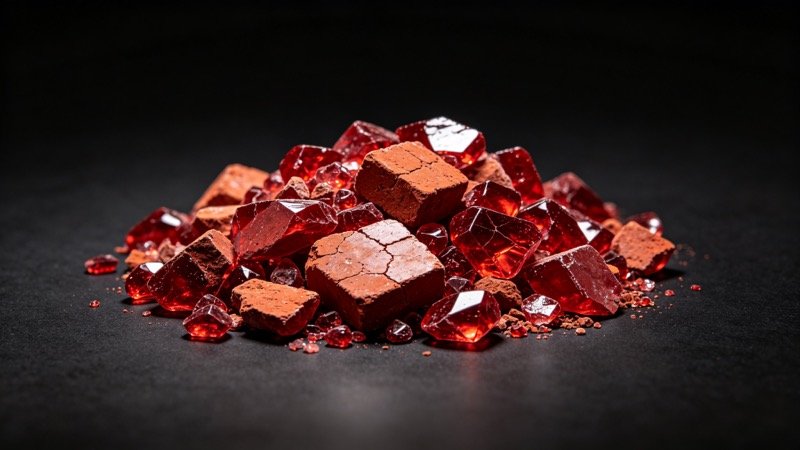
Nonmetal USGS 2025 black, red, and gray (not pic...
Atomic number 34Z
Atomic mass 78.972u
Valence e⁻ 6
Electron config. 1s2 2s2 2p6 3s2 3p6 4s2 3d10 4p4
Density
4.81g/cm³
Melting point
221°C
Crustal abundance
0.05ppm
Annual production
103700metric tons
Recycling rate
Mainly byproduct recovery from copper anode slimes

Why This Element

Selenium is a rare essential micronutrient (deficiency causes white muscle disease in livestock and thyroid dysfunction in humans) and a semiconductor with unique photoelectric properties that made it the first material used in commercial photocopiers and solar cells — yet production is entirely byproduct-dependent, limiting supply flexibility.

Applications

Optoelectronic materialsGlass coloringFeed additivesRubberCopiers (photoreceptors)

Applications in DepthElement & compound uses

Main Uses of the Element

Selenium is a nonmetal discovered in 1817, with a density of about 4.81 g/cm³ and a melting point around 221 °C, combining photoconductivity with semiconductor behavior, and finding uses in optoelectronics, glass, and nutrition. Electrostatic copying and laser printing are selenium's most classic uses: the amorphous selenium or selenium-alloy photoreceptor on the drum conducts under light and insulates in the dark, transferring toner to paper through an electrostatic latent image, making it the core component of copiers and laser printers. In the glass industry, selenium acts as both decolorizer and colorant: a trace cancels the green tint from iron impurities to make glass clear, while a slightly larger amount makes red glass for signal lights and art glass. In nutrition, selenium is an essential trace element; sodium selenite and related compounds are used for food fortification, animal feed additives, and dietary supplements, and selenium supplementation was once promoted in low-selenium regions of China to prevent Keshan disease. Selenium also goes into rectifiers, photovoltaic cells, and alloying additives.

Key Compounds and Their Uses

Sodium selenite Na2SeO3 is the most common selenium-supplement compound, used for food fortification, animal feed, and dietary supplements, and is also a laboratory selenium source. Cadmium selenide CdSe is an important semiconductor material used in red pigments, photovoltaic cells, and quantum dots; modern quantum-dot displays heavily employ CdSe quantum dots. Zinc selenide ZnSe is transparent to infrared light and is used to make infrared lenses, windows, and laser optics. Lead selenide PbSe is a mid-infrared detector material used in thermal imaging and gas analysis. Selenium sulfide SeS2 is used as an anti-dandruff shampoo active and as an antifungal agent. Selenium dioxide SeO2 serves as an oxidant in organic synthesis and as an additive in manganese electrolysis. Sodium selenosulfate also sees limited use in photographic fixing and chemical analysis. Amorphous selenium thin film is the direct-conversion photoconductor layer of flat-panel digital X-ray detectors, used in medical imaging and security screening.
Element History

Discovered in 1817 by Jöns Jakob Berzelius while analyzing red precipitate from sulfuric acid production at the Gripsholm vitriol factory in Sweden. He isolated two new elements: selenium and thorium, identifying selenium's distinct red color and semiconductor properties. Today recovered primarily as a byproduct of copper anode slime refining.

Alloys of this element (3)

View all alloys → ZnSe CIGS Chalcogenide

Related Elements

H · Hydrogen C · Carbon N · Nitrogen O · Oxygen P · Phosphorus S · Sulfur

Frequently Asked QuestionsLong-tail Q&A · data-driven

What is the melting point of Selenium?
221 °C
What is the boiling point of Selenium?
685 °C
What is the density of Selenium?
4.81 g/cm³
What are the atomic number and category of Selenium?
34 · Nonmetal
Which ore is Selenium mainly extracted from?
copper sulfide ores (byproduct)
What are the world reserves of Selenium?
92000 metric tons
What is the annual production of Selenium?
103700 metric tons
What are the main uses of Selenium?
Selenium is a rare essential micronutrient (deficiency causes white muscle disease in livestock and thyroid dysfunction in humans) and a semiconductor with unique photoelectric properties that made it the first material
Who discovered Selenium and when?
Jöns Jakob Berzelius · 1817