Home/ Elements/ Ru
Ruthenium
Ru 44

Ruthenium

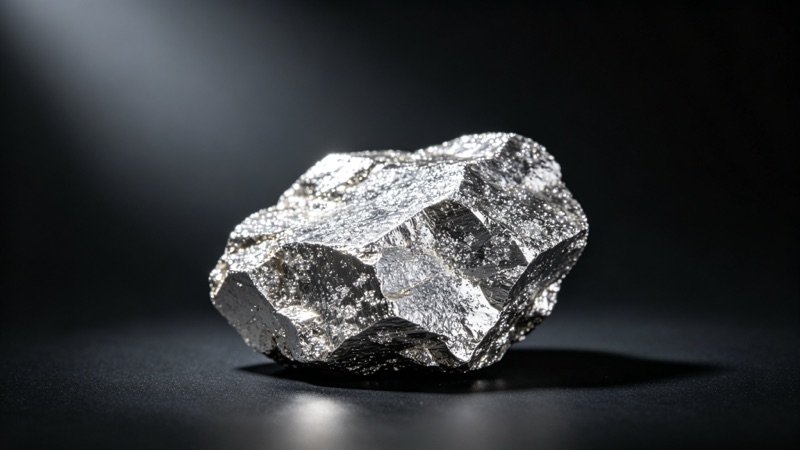
Ruthenium is a chemical element; it has symbol Ru and atomic number 44. It is a rare transition metal belonging to the platinum group of the periodic table. Like the other metals of the platinum group, ruthenium is unreactive to most chemicals. Karl Ernst Claus, a Russian scientist of German descent, discovered the element in 1844 and named it after Ruthenia, the Latin word for Rus'. Ruthenium compounds are used in electronics (chip resistors), as catalysts in chemical synthesis, and in jewelry as a hardener for platinum and palladium.

Transition Metal USGS 2025 silvery white metallic
Atomic number 44Z
Atomic mass 101.072u
Valence e⁻ 1
Electron config. 1s2 2s2 2p6 3s2 3p6 4s2 3d10 4p6 5s1 4d7
Density
12.45g/cm³
Melting point
2334°C
Crustal abundance
0.001ppm
Annual production
30tonnes Ru
Recycling rate
50%(Very low recycling rate; PGM recovered from spent catalysts and electronics)

Why This Element

Ruthenium is the hardest and most brittle of the platinum group metals. Its primary industrial value stems from three properties: excellent electrical conductivity for electrical contact alloys, superior chemical stability for anodes in chlorine production, and novel applications in electronic packaging and catalysis.

Applications

Hard drivesCatalystsAlloysSolar cells

Applications in DepthElement & compound uses

Main Uses of the Element

Ruthenium is the least abundant and relatively the most affordable of the platinum-group metals. Though used in small tonnages, it is irreplaceable in several niches: data storage, fine chemicals, and specialty alloys. Its largest industrial use is in hard disk drives: ever since the mechanical hard-disk era, ruthenium has served as an intermediate alloy layer and seed layer in the magnetic recording medium, helping cobalt-chromium magnetic grains align more uniformly and remain finer-grained, thereby multiplying the areal recording density per disk platter. Today's data-center storage still depends on it. In chemicals, ruthenium is the active component of a number of high-performance catalysts, used both in supported catalytic hydrogenation and selective oxidation and in newer energy directions such as water electrolysis for hydrogen production and hydrogen-evolution electrodes for fuel cells. In alloys, ruthenium is frequently added as a hardener to platinum and palladium alloys to make spark-plug electrodes, electrical contacts, platinum-ruthenium thermocouples, and bushings for glass-fiber drawing, because of its high melting point, wear resistance, and resistance to high-temperature corrosion. In renewable energy, ruthenium-based dye-sensitized solar cells were once a research hotspot, holding leading photoconversion efficiencies among dye cells for a long time. Ruthenium is also used in wear-resistant electrical contacts, resistor films, and barrier layers for microelectronic packaging.

Key Compounds and Their Uses

Ruthenium dioxide (RuO2) is a conductive metal oxide, deep blue to black in appearance, and is a key material for thick-film chip resistors and ruthenium-based thin-film resistor pastes. It also serves as the active component of titanium anodes (dimensionally stable anodes) used in the chlor-alkali industry and in electroplating anodes. Ruthenium trichloride (RuCl3), commonly available as both a trihydrate and an anhydrous form, is the entry-level starting material for preparing nearly all ruthenium catalysts and complexes; supported on activated carbon or alumina it becomes a widely used selective hydrogenation catalyst, and it is also used in ruthenium electroplating and electrode coatings. Tris(2,2'-bipyridine)ruthenium(II) dichloride (the Ru(bpy)3 complex) is a classic luminescent metal complex that glows with a bright orange-red fluorescence under visible light. It is widely used in chemiluminescence analysis, photosensitization, dye-sensitized solar cells, and photocatalytic water-splitting research, and is a common model compound in electrochemistry teaching.
Element History

Discovered in 1844 by Karl Ernst Claus while analyzing platinum ore from the Ural Mountains. Though other platinoids were discovered earlier, ruthenium was the last of the six to be identified as a distinct element. Currently recovered as a byproduct of nickel-copper mining in South Africa, Russia, and Canada.

Related Elements

Sc · Scandium Ti · Titanium V · Vanadium Cr · Chromium Mn · Manganese Fe · Iron Co · Cobalt Ni · Nickel

Frequently Asked QuestionsLong-tail Q&A · data-driven

What is the melting point of Ruthenium?
2334 °C
What is the boiling point of Ruthenium?
4150 °C
What is the density of Ruthenium?
12.45 g/cm³
What are the atomic number and category of Ruthenium?
44 · Transition Metal
Which ore is Ruthenium mainly extracted from?
Platinum-group minerals
What are the world reserves of Ruthenium?
5000 tonnes
What is the annual production of Ruthenium?
30 tonnes Ru
What are the main uses of Ruthenium?
Ruthenium is the hardest and most brittle of the platinum group metals. Its primary industrial value stems from three properties: excellent electrical conductivity for electrical contact alloys, superior chemical stabili
Who discovered Ruthenium and when?
Karl Ernst Claus · 1844