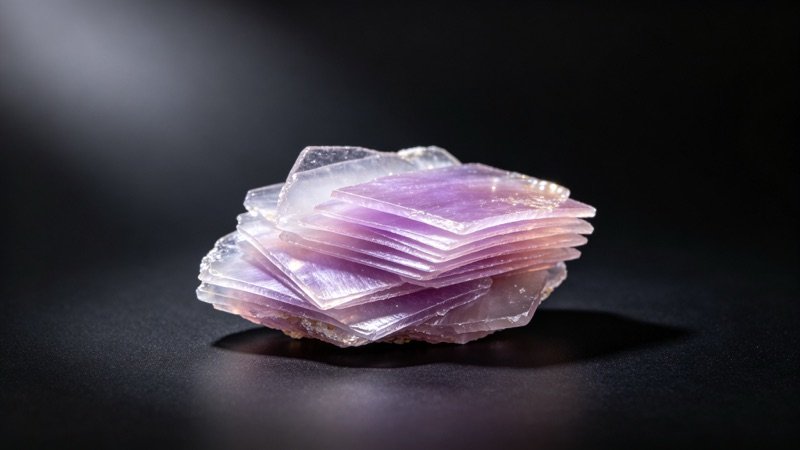
Rubidium is an alkali metal that is extremely soft and highly reactive; it is dispersed in the Earth's crust and is mainly extracted from lepidolite and salt brines. Its tonnage is tiny but its status is special. Its best-known application is atomic clocks: the microwave transition of rubidium atoms is remarkably stable, and rubidium vapor-cell clocks are small, low-power and far cheaper than cesium clocks, so they are widely used in GPS receivers, communication base stations, grid time synchronization and satellite-navigation terminals—the invisible heart of everyday positioning and timing. In specialty glasses, adding rubidium raises refractive index and stability, used in night-vision fibers and certain optical lenses. In phototubes and photocells, rubidium's low work function makes it an excellent photocathode material for infrared night vision and image-intensifier tubes. Rubidium also goes into magnetometers, atomic gyroscopes and ion-trap research for quantum computing, making it a key minor metal for precision measurement and quantum technology.
Rubidium chloride (RbCl) is the basic feedstock for preparing other rubidium compounds and metallic rubidium, and is also used in density-gradient centrifugation in molecular biology to separate nucleic acids and proteins. Rubidium hydroxide (RbOH) is a strong base used as a strongly alkaline reagent in organic synthesis and electrochemical research, with small amounts used in special electrolytes. Rubidium carbonate (Rb2CO3) is an additive for specialty optical glass and CRT panels, raising the glass's chemical stability and refractive index, and is also used in certain catalysts and ceramic raw materials. In general, rubidium compounds are consumed in very small amounts, serving mainly atomic clocks, optics and laboratory research, and do not enter mass-market consumer products.