Mercury is the only metal that is liquid at room temperature: silvery-white, readily volatile, with highly toxic vapor. Humanity has used it for over two thousand years, but the modern trend is toward comprehensive phase-out and substitution. Its most classic consumer use was the mercury column of glass clinical thermometers and medical sphygmomanometers; thanks to its uniform expansion near room temperature and clear readings it long dominated clinical temperature measurement. Yet because spilled mercury vapor is highly toxic and hard to clean up, since 2000 the world has progressively replaced it with electronic thermometers, infrared ear thermometers and aneroid sphygmomanometers, and China has also banned the production of mercury thermometers and sphygmomanometers. Fluorescent tubes and compact fluorescent lamps once used mercury-vapor discharge to excite phosphors, but with the rise of LED lighting such sources are rapidly disappearing. Industrially, the chlor-alkali industry once used the mercury-cell process to electrolyze brine for chlorine and caustic soda; because of severe mercury pollution, this process has been fully replaced by membrane-cell technology. Historically mercury was also used in amalgamation gold extraction, barometers, certain dental amalgam fillings and switches and relays; today, apart from a very few special instruments still in controlled use, almost all traditional uses have been eliminated under environmental regulations. It must be stated honestly that mercury entering water bodies through industrial discharges is converted to methylmercury, which accumulates through the food chain into people and causes neurological damage as in Minamata disease; globally its production and use are being strictly restricted under the Minamata Convention.
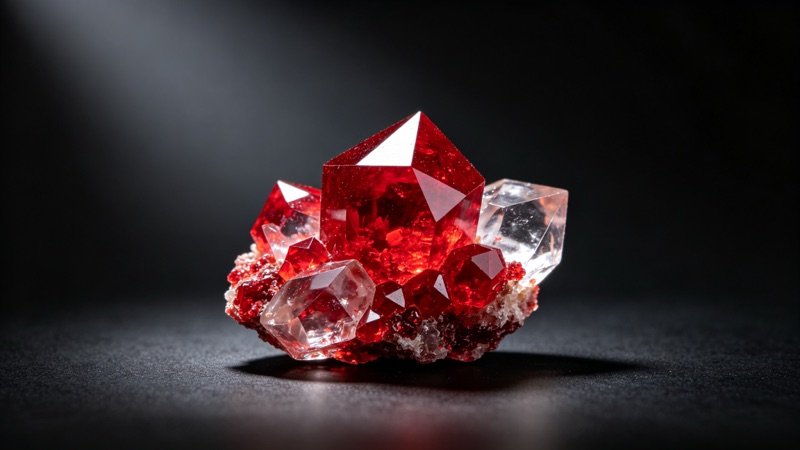
Mercury(II) sulfide (HgS), i.e. cinnabar, is the main ore of mercury in nature and the sole raw material for refining mercury; at the same time it is a traditional Chinese red pigment, used from Dunhuang murals to the ink paste of calligraphy seals, and has been employed for a thousand years for its chemical stability and deep, subdued tone. Mercuric chloride (HgCl2) is a highly toxic white crystal, once used as a wood preservative, disinfectant and laboratory analytical reagent; because of its extreme toxicity and environmental persistence, it is now strictly restricted. Mercuric oxide (HgO) is an orange-red or yellow powder once used to make small mercury batteries, in chemical analysis and as a feedstock for mercury electrodes; for environmental reasons it has largely disappeared today. Methylmercury (CH3Hg+) is not an industrial product but an organomercury compound formed by microbial methylation of mercury in water bodies; strongly fat-soluble, it accumulates to high levels in fish and shellfish through the food chain, is the culprit behind Minamata disease, and is today the core concern of global mercury environmental risk. In addition, mercury fulminate was once the earliest percussion primer, long since replaced by lead azide and others because of its excessive sensitivity.