Home/ Elements/ Dy
Dysprosium
Dy 66

Dysprosium

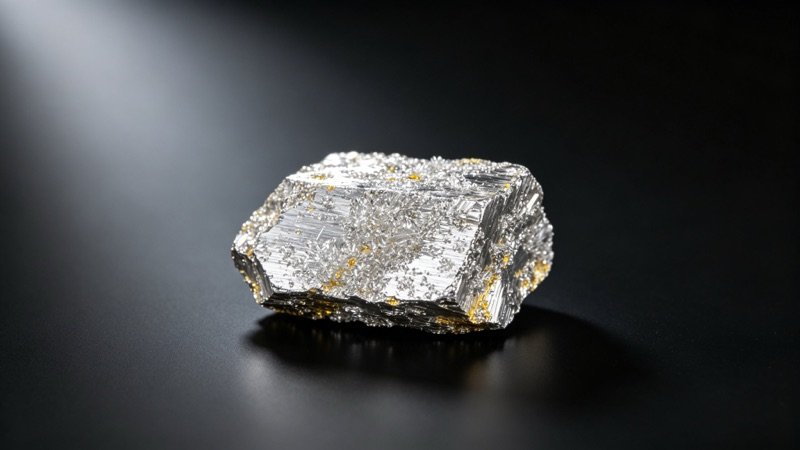
Dysprosium is a chemical element; it has symbol Dy and atomic number 66. It is a rare earth element with a metallic silver luster. Dysprosium was first identified in 1886 by Paul-Émile Lecoq de Boisbaudran. It is never found in nature as a free element, but like other lanthanides, it is present in various minerals. Dysprosium is used in neodymium-based magnets to improve their performance at high temperatures, in dysprosium lamps (used in film projection and photoengraving), and in data storage devices.

Lanthanide USGS 2025 silvery white
Atomic number 66Z
Atomic mass 162.5u
Valence e⁻ 2
Electron config. 1s2 2s2 2p6 3s2 3p6 4s2 3d10 4p6 5s2 4d10 5p6 6s2 4f10
Density
8.54g/cm³
Melting point
1407°C
Crustal abundance
5.2ppm
Annual production
500tonnes REO
Recycling rate
1%(Low recycling rate; recovered from neodymium magnets (Dy-Nd-Fe-B))

Why This Element

Dysprosium additions (3-5%) dramatically improve the coercivity of neodymium-iron-boron (NdFeB) permanent magnets at elevated temperatures — preventing thermal demagnetization in electric vehicle traction motors that operate at up to 180°C. This role makes dysprosium a high-priority critical mineral, with 95% of production coming from China.

Applications

NdFeB magnet additiveLasers

Applications in DepthElement & compound uses

Main Uses of the Element

Dysprosium is one of the most strategically valuable of the heavy rare earths, and nearly all of its use is tied to high-end NdFeB magnets. Ordinary NdFeB magnets demagnetize noticeably once they exceed about 100 °C, whereas electric-vehicle traction motors, wind-turbine generators, and industrial servo motors run continuously at high temperature and strong vibration. By doping a few percent of dysprosium into the magnet grain boundaries, engineers greatly raise the magnetocrystalline anisotropy field and coercivity, so that the magnet holds its magnetization firmly at 150–200 °C—one could say that without dysprosium there would be no NdFeB motor with a temperature rating high enough for automotive use. Besides magnets, dysprosium is used in Tb-Dy-Fe magnetostrictive alloys, dysprosium metal-halide lamps, and as a dopant in certain laser crystals; its isotopes also strongly absorb neutrons and see limited use in nuclear-reactor control materials. Because global supply is highly concentrated, dysprosium has long been regarded as a critical metal.

Key Compounds and Their Uses

Dy2O3 (dysprosium(III) oxide) is the principal oxide of dysprosium. It is a white powder with a faint yellow tinge and the direct raw material for producing dysprosium metal, dysprosium-iron alloy, and the dysprosium targets used for grain-boundary additions in NdFeB magnets; it is also used as a coloring additive in glass and ceramics, and as a deposition target for magneto-optical disk thin films. DyCl3 (dysprosium trichloride) is an intermediate in the solvent-extraction separation flowsheet, yielding dysprosium metal by calcium reduction or molten-salt electrolysis, which is then alloyed with iron and terbium for magnets and magnetostrictive materials. In industry, the elemental metal is almost never used directly; instead, dysprosium reaches magnet makers in the form of dysprosium-iron alloy, dysprosium targets, or dysprosium oxide powder, and is applied to the surface of the NdFeB magnet and diffused into the grain boundaries by grain-boundary diffusion, thereby achieving the largest possible coercivity gain with the least dysprosium.
Element History

Detected spectroscopically in 1886 by Paul Émile Lecoq de Boisbaudran while analyzing holmium preparations — he found a new element whose oxide was 'hard to get at'. Isolated as pure metal in 1906. Currently recovered from monazite and bastnäsite ores. Its high-temperature magnetic properties are critical to modern electric vehicle motors.

Related Elements

La · Lanthanum Ce · Cerium Pr · Praseodymium Nd · Neodymium Pm · Promethium Sm · Samarium Eu · Europium Gd · Gadolinium

Frequently Asked QuestionsLong-tail Q&A · data-driven

What is the melting point of Dysprosium?
1407 °C
What is the boiling point of Dysprosium?
2567 °C
What is the density of Dysprosium?
8.54 g/cm³
What are the atomic number and category of Dysprosium?
66 · Lanthanide
Which ore is Dysprosium mainly extracted from?
bastnäsite, ion-adsorption
What are the world reserves of Dysprosium?
6000000 tonnes REO
What is the annual production of Dysprosium?
500 tonnes REO
What are the main uses of Dysprosium?
Dysprosium additions (3-5%) dramatically improve the coercivity of neodymium-iron-boron (NdFeB) permanent magnets at elevated temperatures — preventing thermal demagnetization in electric vehicle traction motors that ope
Who discovered Dysprosium and when?
Lecoq de Boisbaudran · 1886