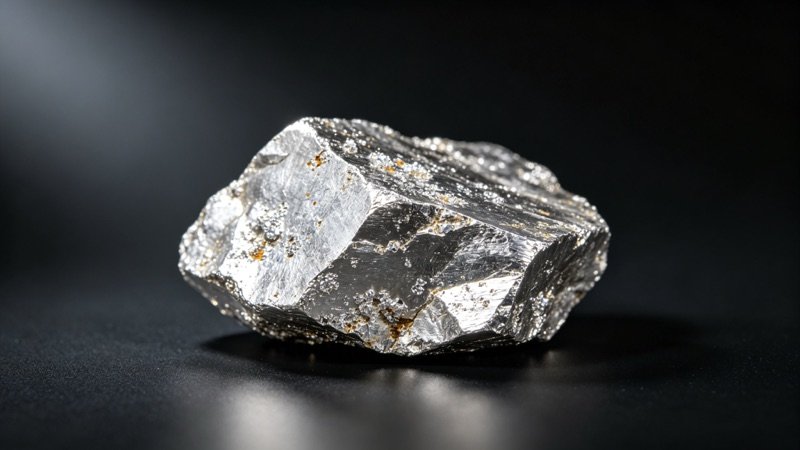
Samarium is a medium-abundance medium-heavy rare earth whose elemental form functions mainly through alloys. Its best-known product is the samarium-cobalt permanent magnet. Although SmCo magnets (SmCo5 and Sm2Co17) have a lower energy product than NdFeB, they remain stable at temperatures of around 300 °C, are oxidation- and corrosion-resistant, and have a low temperature coefficient. They are therefore used in aerospace sensors, missile-guidance gyroscopes, military traveling-wave tubes, high-speed motors, and downhole petroleum instruments—applications where temperature and reliability demands are severe. In the nuclear field, samarium-149 is a strong neutron poison with an extremely high neutron absorption capacity and is used in reactor control materials and burnup monitoring. Radioactive samarium-153 is also used to relieve pain in cancer patients with bone metastases. Samarium is additionally used in carbon-arc lamp electrodes, ceramic capacitors, and certain hydrogenation catalysts—small-volume applications that are nonetheless irreplaceable.
Sm2O3 (samarium(III) oxide) is the principal oxide of samarium. It is a pale yellowish-white powder and the starting point for producing samarium metal, SmCo magnets, and various samarium compounds. On its own it is also used to make infrared-absorbing optical glass and ceramic capacitor dielectrics, and serves as a catalyst and chemical additive. SmCo5 is the first-generation intermetallic compound of the samarium-cobalt system; with its high Curie temperature and large coercivity, it is the mainstay grade of permanent magnets used in aerospace and defense. The second-generation Sm2Co17 further raises the energy product and maximum operating temperature. SmCl3 (samarium trichloride) is an intermediate in the extraction and separation flowsheet, used for the electrolytic production of samarium metal and the synthesis of other samarium compounds, and does not itself enter end products.