Home/ Elements/ Gd
Gadolinium
Gd 64

Gadolinium

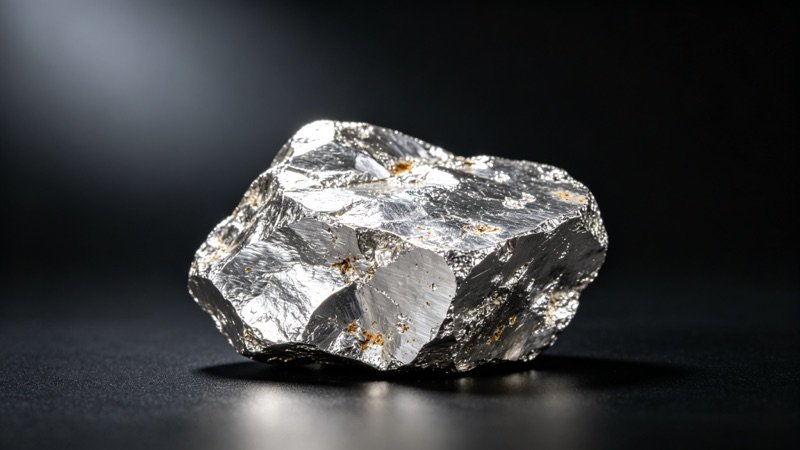
Gadolinium is a chemical element; it has symbol Gd and atomic number 64. Gadolinium is a silvery-white, malleable, and ductile rare-earth metal. It is found in nature in combination with other elements in minerals such as gadolinite and monazite. Gadolinium possesses unusual metallurgical properties, to the extent that even small concentrations can improve the workability, oxidation resistance, and temperature characteristics of many alloys. Gadolinium is used in MRI contrast agents, neutron absorbers, and phosphors for X-ray intensifying screens.

Lanthanide USGS 2025 silvery white
Atomic number 64Z
Atomic mass 157.253u
Valence e⁻ 2
Electron config. 1s2 2s2 2p6 3s2 3p6 4s2 3d10 4p6 5s2 4d10 5p6 6s2 4f7 5d1
Density
7.9g/cm³
Melting point
1312°C
Crustal abundance
6.2ppm
Annual production
700tonnes REO
Recycling rate
1%(Very low recycling rate; limited specialty market)

Why This Element

Gadolinium has the highest thermal neutron absorption cross-section of any known stable element — making it ideal for nuclear reactor control rods — and acts as a powerful T1 contrast agent in MRI scanners by shortening proton relaxation times. These two properties make it uniquely valuable to nuclear and medical imaging industries.

Applications

MRI contrast agentsReactor control rods

Applications in DepthElement & compound uses

Main Uses of the Element

Gadolinium stands out among the rare earths for two strengths: magnetism and neutron absorption. Its thermal-neutron absorption cross-section is among the highest of all elements, so it is used directly as reactor control rods and burnable poisons, and in the ionization chambers and dosimeters of neutron detectors. In medical imaging, gadolinium is the core component of the main positive contrast agents used in magnetic resonance imaging: gadolinium ions are chelated and injected into the body, and their strong paramagnetism shortens the relaxation time of surrounding water molecules, so that tumors and vascular lesions show up clearly on T1-weighted images. In materials research, metallic gadolinium has a very strong magnetocaloric effect and is the core working material for room-temperature magnetic-refrigeration prototypes and room-temperature magnetic refrigerators. In addition, gadolinium gallium garnet (GGG) single-crystal wafers were once used as substrates for magnetic-bubble memories and remain a substrate material for some magneto-optical devices and laser gyros.

Key Compounds and Their Uses

Gd2O3 (gadolinium(III) oxide) is the starting point for preparing gadolinium metal, gadolinium chelate contrast agents, and various gadolinium ceramics; it is also used in X-ray intensifying-screen phosphors and as an optical-glass additive, taking advantage of its high atomic number to absorb X-rays. GdCl3 (gadolinium trichloride) is a hydrometallurgical intermediate used in NMR and coordination-chemistry research to prepare paramagnetic reagents and organometallic precursors. Gd2O2S:Tb is the terbium-activated gadolinium oxysulfide scintillator: high-purity gadolinium oxysulfide powder is doped with trace terbium as the luminescence center, and under X-ray irradiation it emits green light. It is the most widely used scintillator in medical fluoroscopy, computed tomography, and digital radiography flat-panel detectors, and directly determines image clarity and the dose received by the patient.
Element History

Discovered spectroscopically in 1880 by Jean Charles Galissard de Marignac, who detected new lines in samarium preparations that he named 'gadolinium' after the mineral gadolinite. Isolated as pure metal in 1906. Currently recovered from bastnäsite and monazite ores alongside other lanthanides. Its primary medical role emerged with MRI contrast agents.

Related Elements

La · Lanthanum Ce · Cerium Pr · Praseodymium Nd · Neodymium Pm · Promethium Sm · Samarium Eu · Europium Tb · Terbium

Frequently Asked QuestionsLong-tail Q&A · data-driven

What is the melting point of Gadolinium?
1312 °C
What is the boiling point of Gadolinium?
3000 °C
What is the density of Gadolinium?
7.9 g/cm³
What are the atomic number and category of Gadolinium?
64 · Lanthanide
Which ore is Gadolinium mainly extracted from?
monazite, bastnäsite
What are the world reserves of Gadolinium?
6000000 tonnes REO
What is the annual production of Gadolinium?
700 tonnes REO
What are the main uses of Gadolinium?
Gadolinium has the highest thermal neutron absorption cross-section of any known stable element — making it ideal for nuclear reactor control rods — and acts as a powerful T1 contrast agent in MRI scanners by shortening
Who discovered Gadolinium and when?
Jean Charles Galissard de Marignac · 1880