Beryllium is a light yet stiff rare light metal with exceptional elasticity, serving mainly aerospace and nuclear industry—two fields with the most demanding performance requirements. In space applications, beryllium is lighter than aluminum yet stiffer than steel, with almost negligible dimensional change with temperature; it is used in satellite structures, gyro platforms of inertial navigation instruments, and optical support structures of telescopes, keeping precision instruments stable under severe thermal gradients. Beryllium copper alloys are another major outlet: when alloyed, beryllium copper is strong, spark-free under impact, and a good electrical and thermal conductor, making it suitable for non-sparking tools used in oil, gas and chemical environments, electrical connectors, and highly elastic spring contacts. In the nuclear industry, beryllium has a large neutron moderation cross-section and is an excellent neutron moderator and reflector material for research reactors and experimental facilities; it is nearly transparent to X-rays, so it is made into the transmission windows of X-ray tubes. Because of its toxicity, beryllium mining and processing are strictly regulated, and its output is small and its price high, so it has always remained a niche metal reserved for critical applications.
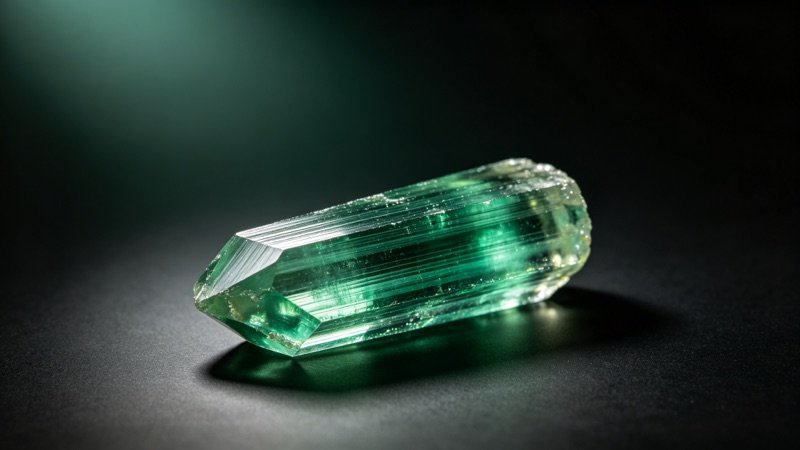
Beryl (Be3Al2Si6O18) is the principal beryllium ore; its transparent, chromium-bearing variety is emerald, while its iron-bearing variety is aquamarine. Beryllium oxide is extracted from the ore and then reduced to metallic beryllium. Beryllium oxide (BeO) has a thermal conductivity comparable to metals yet is an excellent electrical insulator and withstands extremely high temperatures; it is used as a heat-dissipating ceramic substrate in high-power transistors, microwave devices and laser devices, and as an insulator in high-temperature furnaces. Beryllium chloride (BeCl2) is mainly an intermediate for preparing metallic beryllium and other beryllium compounds; it is itself fairly toxic and does not enter consumer products directly. Beryllium fluoride (BeF2) is a key component of the lithium fluoride–beryllium fluoride molten-salt coolant used in molten-salt reactors, exploiting its low melting point and high neutron transparency; it is also a raw material for the magnesiothermic production of metallic beryllium. It must be emphasized that the dust and fumes of all soluble beryllium compounds are highly toxic, and chronic inhalation can cause chronic beryllium disease; their production, processing and recycling must therefore be carried out under strictly enclosed and protected conditions.