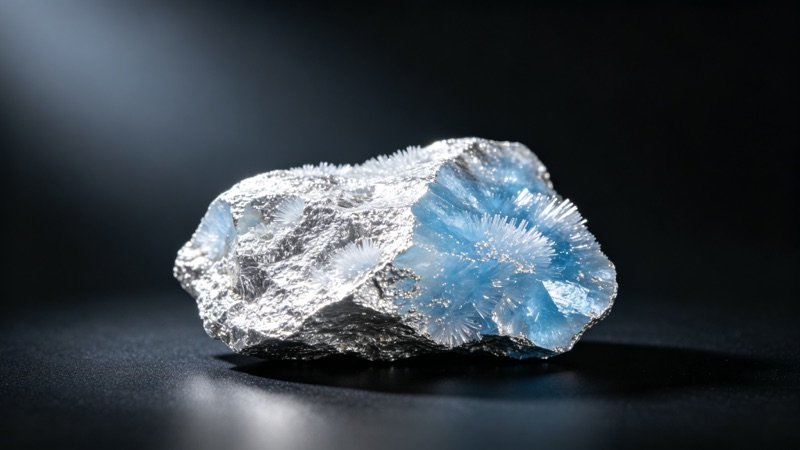
Cadmium is a soft, ductile, but highly toxic silvery-white metal. Its industrial uses concentrate on batteries, electroplating, and (historically) pigments, and overall it is steadily contracting under health and environmental pressure. Its largest use is nickel-cadmium batteries: from portable cells to industrial standby power, railway locomotives, and aircraft starter batteries, NiCd batteries are known for long cycle life, tolerance of overcharge/discharge, and good low-temperature performance, and still retain a share in certain emergency power supplies and power tools, though in the consumer portable field they have largely been displaced by nickel-metal hydride and lithium-ion batteries. Cadmium plating was once widely used for aerospace and electronic fasteners, because cadmium coatings offer outstanding corrosion protection in marine atmospheres and prevent hydrogen embrittlement; however, owing to cadmium's toxicity, strict restrictions have been imposed on its use in Europe, America, and China, and most applications have now been replaced by zinc-nickel alloys and Geomet (Dacromet) coatings. Cadmium is also a control-rod material for nuclear reactors—its extremely strong neutron absorption makes it useful for regulating reactor power. Pigments and stabilizers are another historical line: cadmium yellow, cadmium red, and cadmium orange were once vivid, stable colorants in oil paints, ceramics, and plastics, but because of the toxicity of cadmium dust and cadmium waste they have been banned in toys, food packaging, and most consumer coatings, with only a few artists' pigments and high-temperature engineering plastics still using them in a limited way.
Cadmium sulfide (CdS), namely cadmium yellow, is a bright yellow semiconductor pigment historically used widely in oil painting, watercolor, ceramic glazes, and plastics; today it is restricted in most civilian applications because of its toxicity. At the same time it is an important photoconductive material, used in photoresistors, thin-film solar cells, and phosphors. Cadmium oxide (CdO) is a brownish-red or brownish-black powder used mainly in sintered nickel-cadmium battery positive electrodes and transparent conductive films, and as a raw material for cadmium pigments and ceramic glazes. Cadmium chloride (CdCl2) is a white, readily soluble crystal used in cadmium electroplating baths, battery electrolytes, and analytical reagents, and is also an intermediate for preparing other cadmium compounds. Cadmium hydroxide (Cd(OH)2) is a white gelatinous precipitate and the main component of the positive active material in nickel-cadmium batteries; it determines battery capacity and cycle life during charge and discharge.