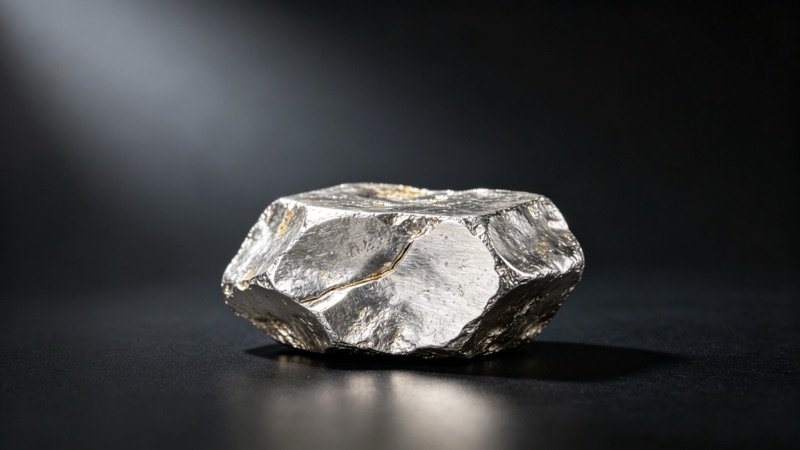
Ytterbium is a member at the tail of the light rare-earth series, and its two best-known uses both relate to precision measurement. Radioactive ytterbium-169 is made into thin-layer radioactive sources used for X-ray diffraction stress measurement of engineering structures and for high-temperature strain gauges, accurately measuring the tiny deformations of bridges, pressure vessels, and welds under load. In atomic clocks, a single ytterbium atom is trapped in an optical lattice to make an ytterbium optical clock—one of the most accurate timekeeping devices ever built by humans—used for timekeeping, satellite navigation, and testing fundamental physical constants. In lasers, ytterbium-doped yttrium aluminum garnet (Yb:YAG) thin-disk lasers have high conversion efficiency and high output power, and have become the mainstream working medium for industrial cutting, welding, and ultrafast lasers. In metallurgy, small amounts of ytterbium are added to stainless steels and aluminum alloys as deoxidizers and modifiers, refining the microstructure and improving toughness.
Yb2O3 (ytterbium(III) oxide) is the principal oxide of ytterbium. It is a white powder and the raw material for preparing ytterbium metal, Yb:YAG laser crystals, and electronic ceramics; it is also used as a minor dopant in optical glasses and phosphors. YbCl3 (ytterbium trichloride) is an intermediate in the extraction and separation flowsheet, used for the electrolytic production of ytterbium metal and the synthesis of ytterbium organometallic complexes. Yb:YAG is the ytterbium-doped yttrium aluminum garnet (Yb:Y3Al5O12) laser crystal, in which a small amount of divalent or trivalent ytterbium ions replaces yttrium sites in the lattice. It has a broad absorption band, high quantum efficiency, and low thermal loading, making it especially well suited to high-power lasers built in thin-disk or fiber geometry. Together with erbium-doped fiber amplifiers and neodymium-doped YAG, it forms the three classic rare-earth-ion systems of solid-state and fiber lasers.