Home/ Elements/ W
Tungsten
W 74

Tungsten

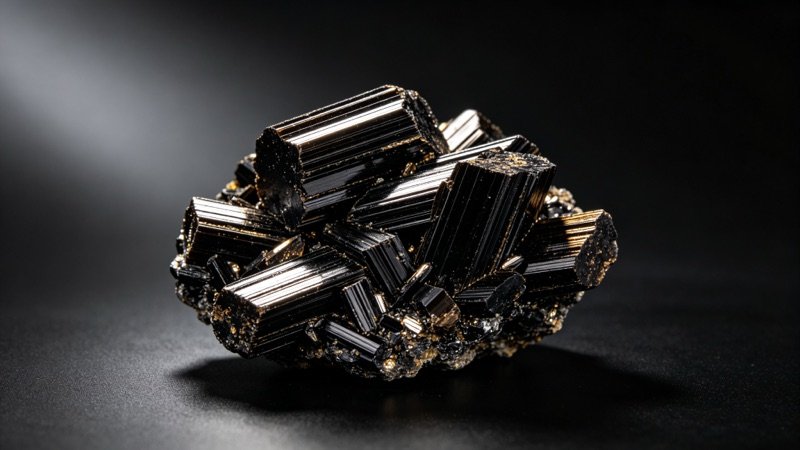
Tungsten, or wolfram, is a chemical element; it has symbol W and atomic number 74. Tungsten is a rare metal found naturally on Earth almost exclusively combined with other elements in chemical compounds rather than alone. It was identified as a new element in 1783 and first isolated as a metal in 1783 by Spanish chemists Juan José and Fausto Elhuyar. Its important ores include scheelite and wolframite. Tungsten has the highest melting point of all metals (3422 °C) and is used in incandescent lamp filaments, cutting tools, and heavy metal alloys.

Transition Metal USGS 2025 grayish white, lustrous
Atomic number 74Z
Atomic mass 183.841u
Valence e⁻ 2
Electron config. 1s2 2s2 2p6 3s2 3p6 4s2 3d10 4p6 5s2 4d10 5p6 6s2 4f14 5d4
Density
19.25g/cm³
Melting point
3422°C
Crustal abundance
1.3ppm
Annual production
81000metric tons
Recycling rate
30%(Moderate recycling rate (~30%); tungsten recovered from hardmetal and mine tailings)

Why This Element

Tungsten has the highest melting point of any known metal (3,422°C) — making it the only material capable of sustaining incandescent operation in light bulbs and providing exceptional high-temperature performance for aerospace alloys. Tungsten carbide is 2.5x stiffer and 10x harder than steel, dominating metal cutting and mining tool industries.

Applications

Cemented carbide
60%
Other
40%

Applications in DepthElement & compound uses

Main Uses of the Element

Tungsten is the metal with the highest melting point in nature, hard, dense and low in thermal expansion, a textbook material for extreme service conditions. Its most classic use is as the filament of incandescent and halogen lamps; though incandescent lamps are being phased out rapidly by LEDs, tungsten-filament lamps still find use in stage lighting, infrared heaters and special light sources. A larger modern use is in cemented carbide - pressing tungsten-carbide powder together with cobalt binder into cutting tools, dies, mine drill bits and tunnel-boring-machine cutter heads - which alone accounts for over half of tungsten consumption; modern metal cutting, oil drilling and stone working all but depend on it. In defense and armor-piercing, high-density tungsten-alloy long-rod penetrators are the main kinetic-energy weapon against armored targets, with density close to depleted uranium but none of the radioactivity concern. Tungsten is also used as the electrode in gas-tungsten arc welding, as grid electrodes and cathodes in vacuum tubes, as heating elements in glass-melting furnaces, as protection tubes for high-temperature thermocouples, and in golf club heads, fishing weights and rotating X-ray anodes. With top-tier melting point, density and hardness all at once, it has almost no rival wherever the rule is 'hotter means harder and heavier means more accurate'.

Key Compounds and Their Uses

Tungsten trioxide (WO3) is an intermediate of tungsten smelting, a yellow powder used to prepare tungsten powder and cemented carbide, and also as an electrochromic film and gas-sensor material. Calcium tungstate (CaWO4), i.e. scheelite, is both one of the main tungsten ores and, in crystal form, a classic scintillator material, long used in X-ray fluorescent screens and scintillation counters and, when europium-doped, as a luminescent material. Ferrous tungstate (FeWO4), i.e. wolframite, is another traditional tungsten ore that, together with scheelite, makes up the bulk of the world's tungsten resources; its beneficiation and alkaline-leaching processes form the basis of modern tungsten metallurgy. Tungsten carbide (WC) is tungsten's most commercially valuable compound, with hardness close to diamond; cemented-carbide tools bonded with cobalt can cut steel at high speed and are widely used in machine tools, drilling and extraction, dies and wear parts, earning it the name 'the teeth of modern manufacturing'. In addition, tungsten disulfide (WS2) serves as a high-temperature solid lubricant for vacuum and extreme-pressure service.
Element History

Distinguished as a distinct element in 1783 by Juan José Elhuyar and Fausto Elhuyar, who reduced tungsten trioxide with charcoal to obtain the pure metal. Tungsten carbide production began in the 1920s, revolutionizing cutting tools. Filament use dominated early 20th century. Currently produced from wolframite and scheelite deposits, with >80% from China.

Alloys of this element (9)

View all alloys → WNiFe W-25Cu WL10 WRe25 WNiCu WC-Co WC-Ni W25Re

Related Elements

Sc · Scandium Ti · Titanium V · Vanadium Cr · Chromium Mn · Manganese Fe · Iron Co · Cobalt Ni · Nickel

Frequently Asked QuestionsLong-tail Q&A · data-driven

What is the melting point of Tungsten?
3422 °C
What is the boiling point of Tungsten?
5930 °C
What is the density of Tungsten?
19.25 g/cm³
What are the atomic number and category of Tungsten?
74 · Transition Metal
Which ore is Tungsten mainly extracted from?
wolframite, scheelite
What are the world reserves of Tungsten?
4600000 metric tons
What is the annual production of Tungsten?
81000 metric tons
What are the main uses of Tungsten?
Tungsten has the highest melting point of any known metal (3,422°C) — making it the only material capable of sustaining incandescent operation in light bulbs and providing exceptional high-temperature performance for aer
Who discovered Tungsten and when?
Carl Wilhelm Scheele · 1783