Home/ Elements/ Re
Rhenium
Re 75

Rhenium

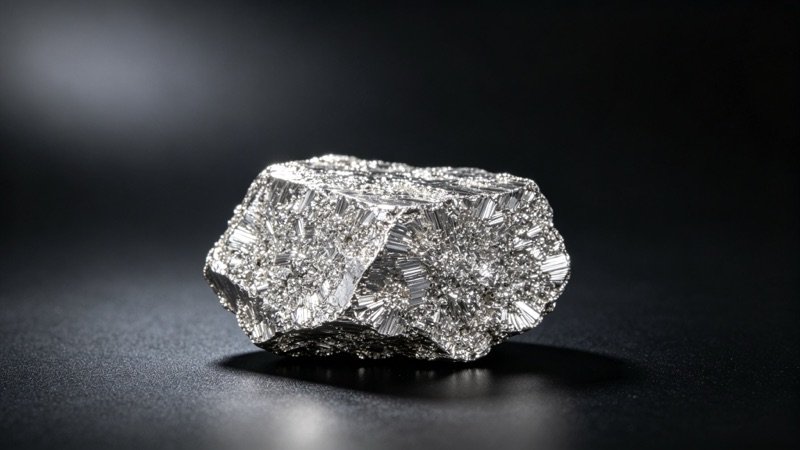
Rhenium is a chemical element; it has symbol Re and atomic number 75. It is a silvery-gray, heavy, third-row transition metal in group 7 of the periodic table. With an estimated average concentration of 1 part per billion (ppb), rhenium is one of the rarest elements in the Earth's crust. Rhenium was the last stable element to be discovered, being identified in 1925 by German chemists Walter Noddack, Ida Tacke, and Otto Berg. Rhenium is used in high-temperature jet engine turbine blades, filaments for mass spectrometers, and as a catalyst in the petroleum industry.

Transition Metal USGS 2025 silvery-grayish
Atomic number 75Z
Atomic mass 186.207u
Valence e⁻ 2
Electron config. 1s2 2s2 2p6 3s2 3p6 4s2 3d10 4p6 5s2 4d10 5p6 6s2 4f14 5d5
Density
21.02g/cm³
Melting point
3186°C
Crustal abundance
0.0004ppm
Annual production
60kilograms (rhenium content)
Recycling rate
70%(Very low recycling rate; recovered from molybdenite concentrates and jet engine blades)

Why This Element

Rhenium is one of Earth's rarest elements (0.001 ppb crustal abundance — rarer than gold by weight), yet its unique high-temperature properties make it irreplaceable in jet engine superalloys. Rhenium additions (1-3%) increase high-temperature creep life of nickel-based superalloys by 300% — no substitute element provides this performance.

Applications

SuperalloysJet enginesCatalysts

Applications in DepthElement & compound uses

Main Uses of the Element

Rhenium is one of the rarest metals in the Earth's crust; it is almost never mined from primary deposits but recovered as a by-product of molybdenite-copper ore processing, with tiny output and high price, and has long been classified as a strategic critical metal. Its largest use is in superalloys for the turbine blades, combustors and turbine disks of jet engines and gas turbines - rhenium-bearing nickel-based single-crystal superalloys can withstand enormous centrifugal forces and thermal shock for long periods at temperatures approaching melting, making rhenium an indispensable alloying element in the single-crystal blades of modern commercial aero-engines; the amount of rhenium in a large airliner engine is small but irreplaceable. Beyond aero-engines, rhenium-bearing alloys are also used in industrial gas turbines, rocket nozzles and hypersonic vehicle components. In chemicals, rhenium is used mainly in platinum-rhenium bimetallic catalysts for petroleum catalytic reforming, converting low-octane naphtha into high-octane gasoline and aromatics; these catalysts are highly active, long-lived and resistant to coke deposition, and are a key catalyst system in refining. Rhenium is also used in high-temperature thermocouples, X-ray targets and certain electronic components.

Key Compounds and Their Uses

Rhenium heptoxide (Re2O7) is the most volatile oxide of rhenium, an orange-yellow solid and the key intermediate for extracting rhenium from the roaster dust of molybdenum ores, as well as the starting point for high-purity rhenium compounds and catalysts. Ammonium perrhenate (NH4ReO4) is the most industrially important rhenium salt, a white crystal used directly to prepare platinum-rhenium reforming catalysts and rhenium metal powder, and is also the main commercial form in which rhenium is traded and priced. Rhenium trioxide (ReO3) is a red oxide with metallic luster, used mainly in catalytic research and specialty thin-film materials. Rhenium disulfide (ReS2) is a layered transition-metal dichalcogenide with a graphene-like two-dimensional structure; it has drawn interest in catalytic hydrogenation, electrochemical energy storage and semiconductor research, but has not yet reached large-scale industrial use. Overall, the great majority of rhenium compounds serve refining catalysis and superalloy precursors, with negligible consumer markets.
Element History

Predicted by Mendeleev as 'eka-manganese' and discovered in 1925 via X-ray spectroscopy by three German chemists (Walter Noddack, Ida Tacke, Otto Berg) working on 660 kg of Norwegian columbite ore — they isolated only 0.1 g of rhenium, making it the last naturally occurring element to be discovered (or confirmed, as earlier claims for technetium were artificial). Currently recovered entirely as a byproduct of molybdenite roasting from Chilean and US copper mines.

Related Elements

Sc · Scandium Ti · Titanium V · Vanadium Cr · Chromium Mn · Manganese Fe · Iron Co · Cobalt Ni · Nickel

Frequently Asked QuestionsLong-tail Q&A · data-driven

What is the melting point of Rhenium?
3186 °C
What is the boiling point of Rhenium?
5596 °C
What is the density of Rhenium?
21.02 g/cm³
What are the atomic number and category of Rhenium?
75 · Transition Metal
Which ore is Rhenium mainly extracted from?
Molybdenite
What are the world reserves of Rhenium?
2500 tonnes
What is the annual production of Rhenium?
60 kilograms (rhenium content)
What are the main uses of Rhenium?
Rhenium is one of Earth's rarest elements (0.001 ppb crustal abundance — rarer than gold by weight), yet its unique high-temperature properties make it irreplaceable in jet engine superalloys. Rhenium additions (1-3%) in
Who discovered Rhenium and when?
Masataka Ogawa · 1908