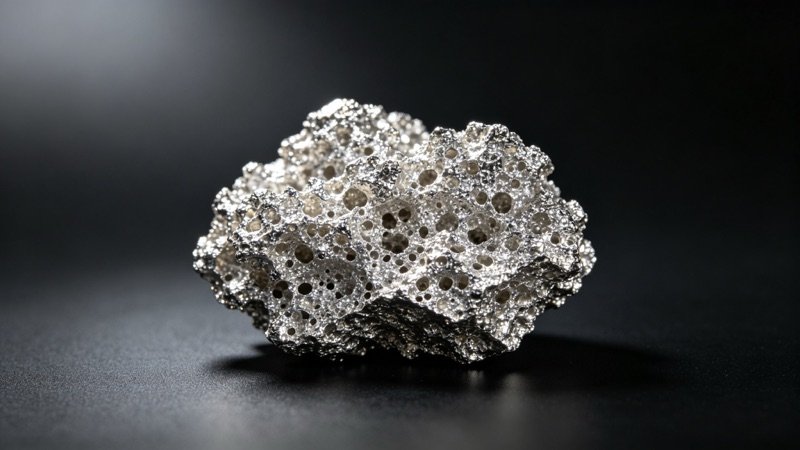
Palladium is one of the few platinum-group metals used on a large scale simultaneously across automobiles, electronics, and chemicals, and it has also been among the most volatile precious metals in recent years. Automotive exhaust catalysis is its largest outlet: in gasoline three-way catalysts, palladium works together with platinum and rhodium, chiefly oxidizing carbon monoxide and unburned hydrocarbons into carbon dioxide and water, and as emissions regulations tighten, the palladium loading per vehicle keeps rising. In electronics, palladium is used for the internal and terminal electrodes of multilayer ceramic capacitors, chip resistors, contact brushes, and connector finishes—palladium plating offers stable contact resistance, wear resistance, and no oxidation, approaching gold in performance at lower cost, and is a common material for high-reliability electrical contacts. In chemicals, palladium is the classic hydrogenation catalyst: palladium on activated carbon is used for selective hydrogenation in pharmaceuticals, fine chemicals, and petroleum fractions, as well as in the production of bulk chemicals such as vinyl chloride and terephthalic acid. Palladium also absorbs and selectively permeates large amounts of hydrogen, making it a key material for hydrogen purification and catalytic dehydrogenation. In dentistry, palladium-silver alloys and palladium-based porcelain-fused-to-metal alloys have long been used for crowns and denture frameworks because of their tooth-like white shade, strength, and corrosion resistance. The white gold used in jewelry is often an alloy of palladium with gold, silver, and copper.
Palladium chloride (PdCl2, palladium dichloride) is the most basic palladium compound, a reddish-brown, deliquescent crystal. It is the parent material for preparing palladium-on-carbon catalysts, palladium plating baths, and other palladium catalysts; on its own it can also oxidize carbon monoxide to carbon dioxide at room temperature and was once used as a gas-detection reagent. Palladium oxide (PdO) is a black powder used mainly as a precursor for thick-film resistors, single-layer capacitor electrodes, and palladium-based catalysts, and also for coloring ceramics and glass. Tetraamminepalladium(II) chloride (Pd(NH3)4Cl2, palladium tetrammine chloride) is the main salt of palladium electroplating and electroless palladium baths. It deposits uniform, dense palladium layers with stable contact resistance on integrated-circuit leads, plugs, and connectors, and is a key material in microelectronic packaging for replacing some gold plating.