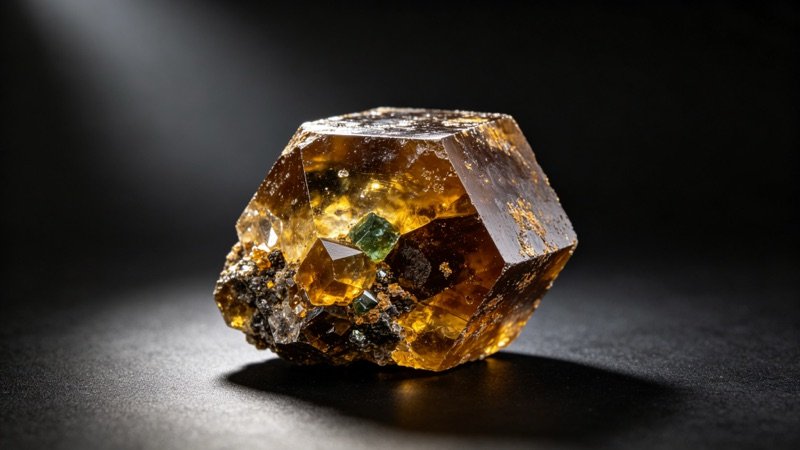
Niobium is a refractory, low-density rare metal that holds a place both in cutting-edge science and in the steel industry thanks to its superconductivity and microalloying effect. Its most cutting-edge use is superconducting materials: niobium-titanium alloy (NbTi) and niobium stannide (Nb3Sn) are currently the most commercially mature low-temperature superconducting magnet materials, used in MRI whole-body scanner magnets, particle accelerators and superconducting coils of nuclear-fusion experiments; most medical MRI scanners worldwide depend on niobium-titanium wire. In stainless steels and high-strength low-alloy steels, niobium acts as a microalloying element added in tiny amounts yet able to refine grain size and raise strength and toughness, widely used in oil and gas transmission pipelines, automotive structural sheets and bridge steels. In aerospace, niobium-based superalloys are used in rocket-nozzle skirts and hot-section components of re-entry vehicles, retaining strength at extremely high temperatures. In addition, lithium niobate single crystals are an important substrate for optoelectronic and surface-acoustic-wave devices, used in cellphone filters.
Niobium pentoxide (Nb2O5) is the raw material for refining niobium metal and for preparing niobates such as lithium niobate, and is also used as an additive in optical glass and ceramic capacitors. Niobium pentachloride (NbCl5) is a chloride intermediate used in chemical-vapor deposition and the synthesis of niobium catalysts, in both laboratory and electronic-grade niobium production. Niobium-titanium alloy (NbTi) is a low-temperature superconductor that becomes superconducting at liquid-helium temperatures and is the workhorse wire for MRI and particle-accelerator magnets. Niobium stannide (Nb3Sn) is an A15-type superconducting compound with a higher upper critical field than NbTi, used in high-field superconducting magnets such as the superconducting coils of fusion devices and high-energy-physics experiments.