Home/ Elements/ Lu
Lutetium
Lu 71

Lutetium

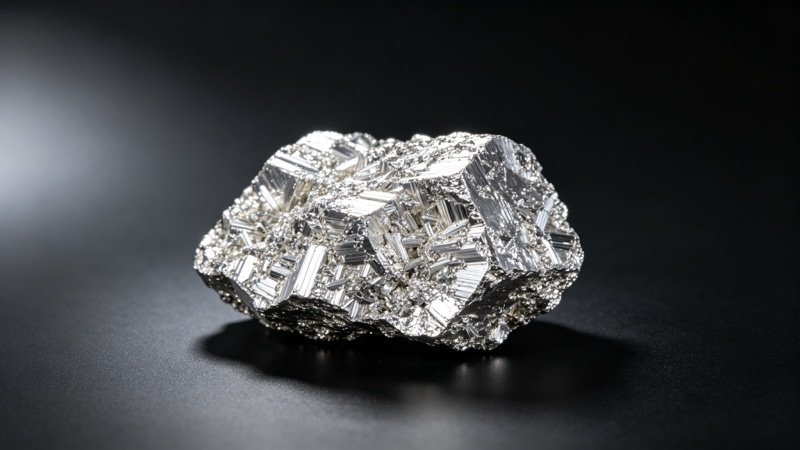
Lutetium is a chemical element; it has symbol Lu and atomic number 71. It is a silvery-white metal, which is resistant to corrosion in dry air but reacts slowly with water. Pure lutetium metal is very hard and dense, the densest of all lanthanides. It is one of the rarest and most expensive of the lanthanides. Lutetium is used in PET scanners (lutetium oxyorthosilicate detectors), in oil refinery catalysts, and has potential use in LED and semiconductor applications.

Lanthanide silvery white
Atomic number 71Z
Atomic mass 174.967u
Valence e⁻ 2
Electron config. 1s2 2s2 2p6 3s2 3p6 4s2 3d10 4p6 5s2 4d10 5p6 6s2 4f14 5d1
Density
9.84g/cm³
Melting point
1652°C
Crustal abundance
0.5ppm
Annual production
Recycling rate
1%(Very low recycling rate; recovered from PET scan detectors)

Why This Element

Lutetium is the last and heaviest stable lanthanide with the highest density and melting point among rare earths. Its primary industrial value stems from LYSO (lutetium-yttrium oxyorthosilicate) scintillator crystals used in PET scanners — the highest-resolution medical imaging technology available — and as a stable isotopic tracer in oil exploration.

Applications

PET detectorsPetroleum cracking catalysts

Applications in DepthElement & compound uses

Main Uses of the Element

Lutetium is the heaviest and rarest of the lanthanides, with extremely low crustal abundance and difficult extraction and separation, which makes it expensive and concentrates its uses in a handful of frontier fields. Its most iconic application is as a scintillator host material for PET (positron emission tomography) detectors: cerium-doped lutetium oxyorthosilicate crystals convert gamma photons into visible light, giving whole-body hospital PET scanners high-sensitivity, high-resolution tumor imaging - currently lutetium's largest and most irreplaceable use. In petrochemicals, lutetium compounds serve as specialized catalysts in petroleum fluid catalytic cracking; although far smaller in volume than light rare earths such as lanthanum and cerium, they still hold a place in fine-chemical processes demanding high activity, long life and selectivity. Lutetium is also used as a minor constituent in certain specialty laser crystals, alloy additions and magnetic materials, and as scintillators and targets in nuclear-physics research. Because it almost always occurs in nature associated with heavy rare earths such as yttrium and gadolinium, separation costs are high and industrial scale remains small - a textbook strategic metal consumed in tiny amounts but irreplaceably.

Key Compounds and Their Uses

Lutetium oxide (Lu2O3) is the most common oxide of lutetium, a white powder used mainly as a doping host for optical glasses and scintillation crystals, and as the starting material for making lutetium metal and other lutetium compounds. Lutetium chloride (LuCl3) is the main halide of lutetium, used in laboratory synthesis and as a catalyst precursor, in small quantities in petroleum fluid catalytic cracking and certain organic-synthesis reactions. Cerium-doped lutetium oxyorthosilicate (LSO:Ce, often written Lu2SiO5:Ce) is lutetium's most iconic compound application: a high-performance scintillation crystal with high density, high light output and fast decay time, widely used in the detector arrays of hospital PET scanners as well as in nuclear-physics experiments and gamma-ray detection for security screening. Beyond these, lutetium nitrate, lutetium fluoride and other lutetium compounds are used only in trace amounts in research and specialty optical materials, with no large consumer market.
Element History

The last naturally occurring element to be discovered. Isolated independently in 1907 by Georges Urbain and Charles James working on ytterbium preparations — both noted the presence of a new element. Urbain named it lutetium after Paris. Purified for the first time as a pure metal in 1953. Currently recovered from monazite ore at low concentrations.

Related Elements

La · Lanthanum Ce · Cerium Pr · Praseodymium Nd · Neodymium Pm · Promethium Sm · Samarium Eu · Europium Gd · Gadolinium

Frequently Asked QuestionsLong-tail Q&A · data-driven

What is the melting point of Lutetium?
1652 °C
What is the boiling point of Lutetium?
3402 °C
What is the density of Lutetium?
9.84 g/cm³
What are the atomic number and category of Lutetium?
71 · Lanthanide
Which ore is Lutetium mainly extracted from?
Xenotime
What are the main uses of Lutetium?
Lutetium is the last and heaviest stable lanthanide with the highest density and melting point among rare earths. Its primary industrial value stems from LYSO (lutetium-yttrium oxyorthosilicate) scintillator crystals use
Who discovered Lutetium and when?
Georges Urbain · 1907